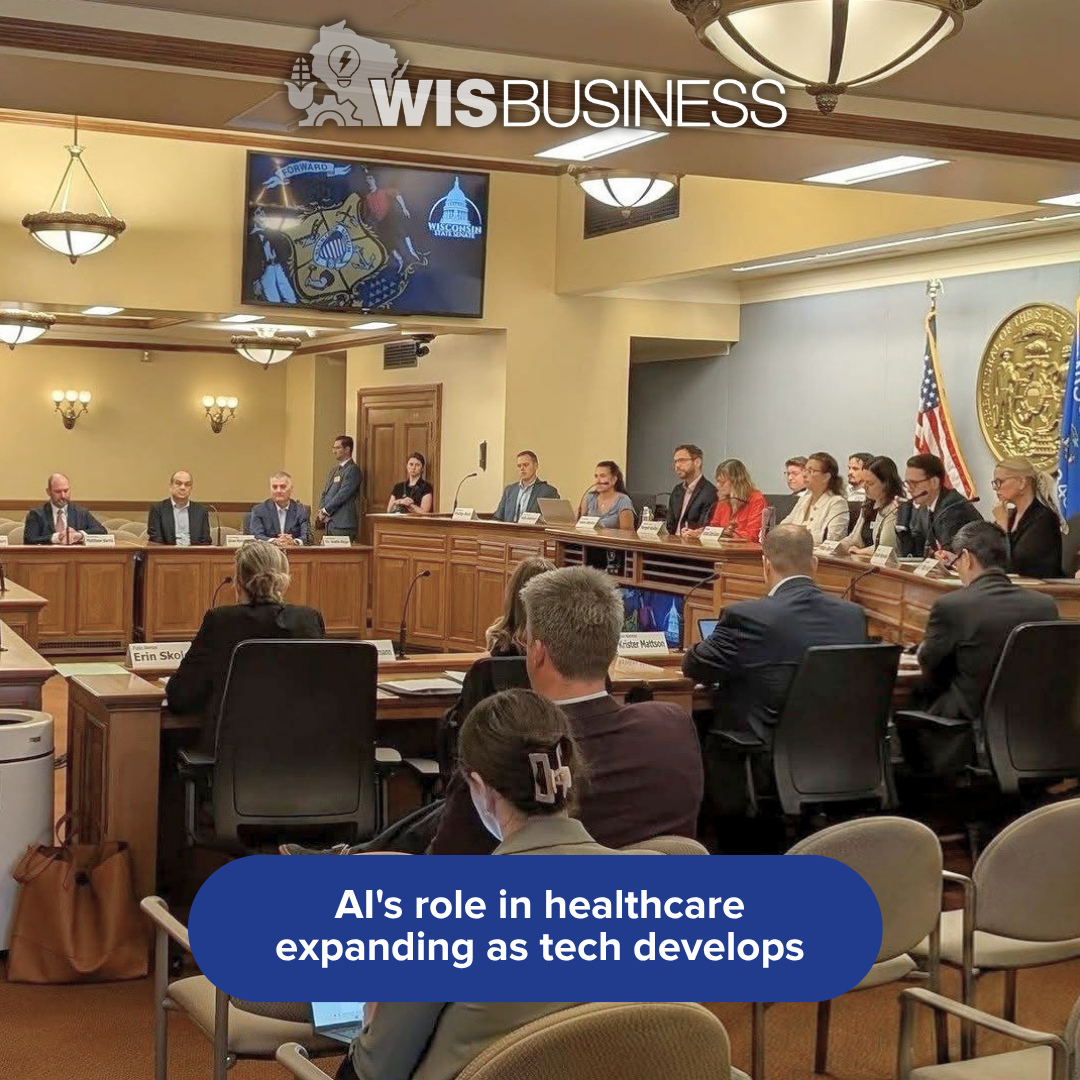
As Wisconsin legislators explore the regulation of artificial intelligence in healthcare, the pace of technological advancements for both patients and healthcare professionals is accelerating. These AI tools are becoming integral to modern medical practices and are taking on more significant responsibilities.
During a recent committee meeting, Frank Meyers from the Federation of State Medical Boards highlighted the rapid proliferation of AI tools in healthcare. "About a year and a half ago, it was challenging to find high-quality tools from reliable providers. Now, they're everywhere," he noted.
This meeting, part of the 2026 Legislative Council Study Committee on AI in Healthcare, featured insights from industry players, regulators, educators, and healthcare providers. They delved into the swift adoption of AI technologies and the implications for oversight.
Meyers pointed out that Verona's Epic Systems has integrated multiple AI applications within its widely used electronic health records systems. He also mentioned Microsoft's Dragon Copilot AI platform, which utilizes ambient scribe technology to document clinical encounters in real-time.
"In the past, this technology primarily documented encounters. However, it has significantly evolved and can now input data directly into medical records, facilitate automatic prescription renewals, and check medical contraindications," Myers explained. "It even surfaces relevant research from medical journals."
Patients are also benefiting from enhanced AI applications, such as Amazon's Health AI program, which interprets medical records and lab results, addresses symptom-related inquiries, and directs requests to healthcare providers. Additionally, tools like ChatGPT offer functionalities for analyzing health data.
"It's essential to note that these tools are not intended to provide diagnostic advice. However, with the nature of generative AI, users can often elicit various responses by framing their queries differently," Meyers cautioned.
Dr. Richard Bruce from UW-Madison's Department of Radiology also spoke at the meeting, emphasizing AI's transformative impact on imaging quality and safety. He observed that the technology leads to improved image resolution, reduced radiation exposure, and fewer mistakes, marking significant advances in radiology.
AI is also streamlining processes like real-time quality checks during ultrasounds and enhancing technicians' capabilities to produce better images. "The result is more efficient and higher-quality healthcare," Dr. Bruce said.
However, speakers acknowledged that AI systems are not infallible and their increased usage has resulted in some notable errors. For instance, a recent incident involved an AI scribe mistakenly documenting that a patient had consumed psychedelic mushrooms, a detail that was absent during their healthcare visit.
Meyers noted that this error was incorporated into the patient's health record and later proposed as a potential cause of her symptoms to her primary care physician. “This isn’t an isolated issue,” he said, citing other instances where AI inaccurately documented medical histories.
As the integration of AI accelerates, regulatory frameworks are struggling to keep pace. In response, several states are beginning to enact measures aimed at safeguarding personal data in light of concerns over AI systems' access and control.
Jordan Francis, a senior policy counsel for the Future of Privacy Forum, observed that states are increasingly empowering consumers by granting them the right to access information regarding third-party data sales and implementing new privacy protections related to data-driven profiling.
"Many states are also introducing sector-specific privacy legislation focusing on consumer health data managed by data brokers," Francis added.
Some states are experimenting with “sandboxes” that permit companies to deploy AI healthcare tools under a defined regulatory environment. Utah, for example, is temporarily suspending certain regulatory requirements from its medical board to facilitate unlicensed AI initiatives under these pilot programs.
Meyers mentioned that evaluations of Utah’s ongoing pilot project have yielded encouraging initial results, but it remains in the early stages. "The primary goal of these sandboxes is to foster experimentation with AI tools, allowing both developers and regulators to understand optimal regulatory approaches," he explained.
Currently, six states are operating active AI pilot programs—Arizona, Connecticut, Delaware, Kansas, Texas, and Utah—while eight others have proposals in the pipeline, though variations exist among them.
As for what lies ahead for Utah's AI regulatory initiatives after the pilot's one-year mark, Meyers indicated uncertainty remains. "No one knows what will come next," he concluded.