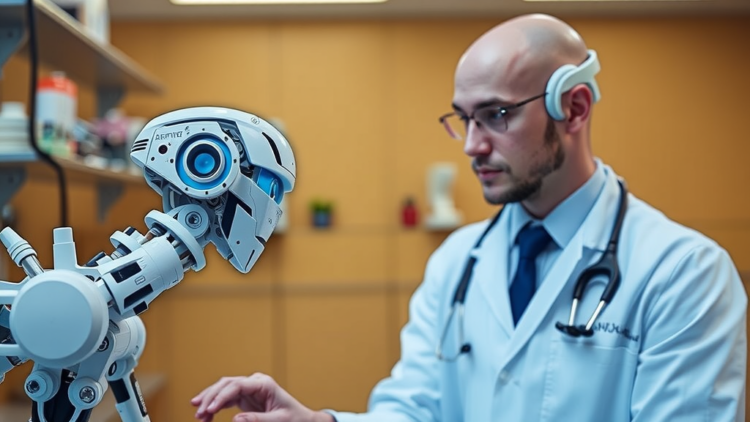
In the evolving landscape of artificial intelligence, a healthcare system in the Bay Area is harnessing this technology to innovate care delivery and support medical professionals. Sutter Health, a nonprofit organization headquartered in Sacramento, caters to over 3.5 million patients across Northern and Central California and has notably enhanced its AI integration in clinical settings over recent years.
In 2024, the organization inaugurated its San Francisco “innovation center,” aiming to collaborate with AI and tech firms on developing digital health applications, remote monitoring solutions, and other advanced technologies.
Sutter Health plays a pivotal role as the West Coast hub for clinical AI advancements by partnering with Aidoc, a medical technology company. This collaboration began last year, focusing on utilizing Aidoc’s AI system to expedite disease detection and improve patient care. In January, their partnership expanded to the field of radiology, wherein the AI technology was employed to analyze imaging scans and generate initial drafts of radiology reports.
Additionally, in February, Sutter Health teamed up with OpenEvidence, an AI-driven medical search engine designed to assist Sutter’s healthcare professionals in quickly finding evidence-based answers to clinical inquiries.
This spring, Sutter Health publicly announced its intention to collaborate with Santa Clara University to establish the Bay Area’s first new medical school in over a century. This institution is set to emphasize emerging AI technologies, aiming to enhance the efficiency and accuracy of the medical profession.
Ashley Beecy, the organization’s inaugural Chief AI Officer, recently discussed with Bay Area News Group how Sutter Health is implementing artificial intelligence to aid doctors, enhance patient experiences, and revolutionize healthcare services.
In her capacity as Chief AI Officer, Beecy leads initiatives focused on responsibly integrating AI into patient care while optimizing service delivery for both patients and providers. Her team's focus is on developing tools and forming partnerships to enhance healthcare operations, providing training for employees on AI utilization, and instituting governance to ensure the safe application of AI technologies.
Beecy emphasized that AI is essential for easing the workload of clinicians and ensuring the highest quality of patient care. Situated in Northern California, a hub for AI development, Sutter Health recognizes the transformative potential of these technologies.
The integration of AI in clinical settings allows Sutter Health’s healthcare providers to utilize the vast amounts of data present in electronic health records more effectively. For instance, AI tools assist in synthesizing this data to provide valuable insights during patient interactions, enabling clinicians to prioritize patient engagement over administrative responsibilities. Innovations such as chart summarization tools and ambient scribing systems significantly reduce the documentation burden, allowing healthcare professionals to focus on patient care and return to work refreshed.
On the patient side, Sutter Health has introduced a user-friendly chatbot that grants patients access to their electronic health records at any time. This initiative enables patients to inquire about new symptoms or determine the appropriate care provider while ensuring data privacy and personalized access.
To address concerns about AI, Sutter Health is committed to building trust through transparency and education. Beecy stated that demonstrating the evaluation, monitoring, and reporting of AI tools before they are rolled out helps to alleviate skepticism among patients and staff alike.
Overall, Beecy noted that AI innovations could enhance the healthcare sector by reducing administrative tasks for care teams, allowing them to concentrate on the human aspects of patient interactions and complex clinical decision-making. The goal is to make healthcare access as seamless as possible, mirroring the convenience often seen in other industries like travel and retail.
With a background in computer systems engineering and a medical degree complemented by additional training, Ashley Beecy is well-equipped to spearhead these initiatives. Based in Emeryville, CA, her multifaceted expertise positions her to navigate the intersection of technology and healthcare effectively.