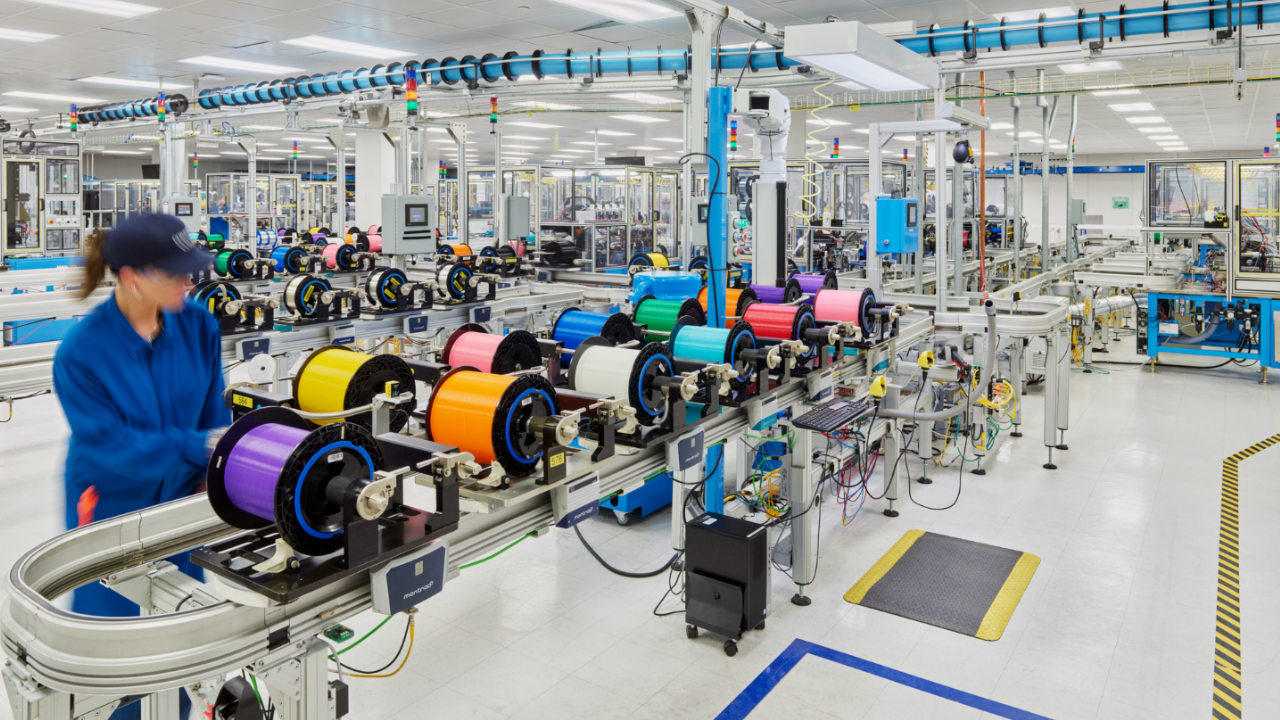
The surge in building data centers for artificial intelligence is not just increasing the need for semiconductors and energy; it is also intensifying the demand for extensive networks of high-speed optical fiber to facilitate data transfer between servers. This trend is placing Corning, a longtime manufacturer based in New York, at the heart of this expanding industry.
Best known for its durable kitchenware and glass for smartphones, Corning is increasing its production of optical fiber as the data center expansion picks up speed. Almost 175 years after its establishment, the company is becoming an essential player in the infrastructure that supports the AI revolution, providing the vital glass connections that link servers within these facilities.
The current boom in AI technology is also contributing to a significant increase in blue-collar jobs. Corning is collaborating with NVIDIA to set up three state-of-the-art optical manufacturing plants in Texas and North Carolina, a development that is expected to create over 3,000 new jobs and enhance Corning’s optical manufacturing capacity in the U.S. by tenfold.
This investment demonstrates how the data center expansion goes beyond the massive buildings themselves, generating a need for American manufacturing and labor to produce the necessary equipment for connectivity.
While concerns about AI potentially displacing human workers are widespread, Corning's chairman, CEO, and president Wendell Weeks asserts that the reality is quite the opposite for this historic manufacturing firm. He mentioned in an interview with Fox News Digital, "AI is a significant job and manufacturing job creator."
Weeks noted that the demand for Corning’s optical fiber is propelling the company through its most rapid growth phase in almost two centuries. "We are likely to double in size in the coming years, with most of our new hires focused on advanced manufacturing, predominantly in the U.S.," he added.
This growth is already evident on Corning’s factory floors. Emily Capek, a planning supervisor at the company's Wilmington, North Carolina location, remarked on how workforce members are witnessing firsthand the influence of AI on their product demand. "Currently, the global need for our glass optical fiber is driven by the escalating AI requirements. It’s an inspiring atmosphere on the manufacturing floor," she said.
While much of the focus on AI has been on chip manufacturing and software development, companies such as Corning are playing a critical role by providing the glass technology that integrates these systems, facilitating the swift growth of the industry. As Weeks highlighted, "The prevalent narrative is that AI is driven by chips, but indeed, those chips rely on glass for connectivity."