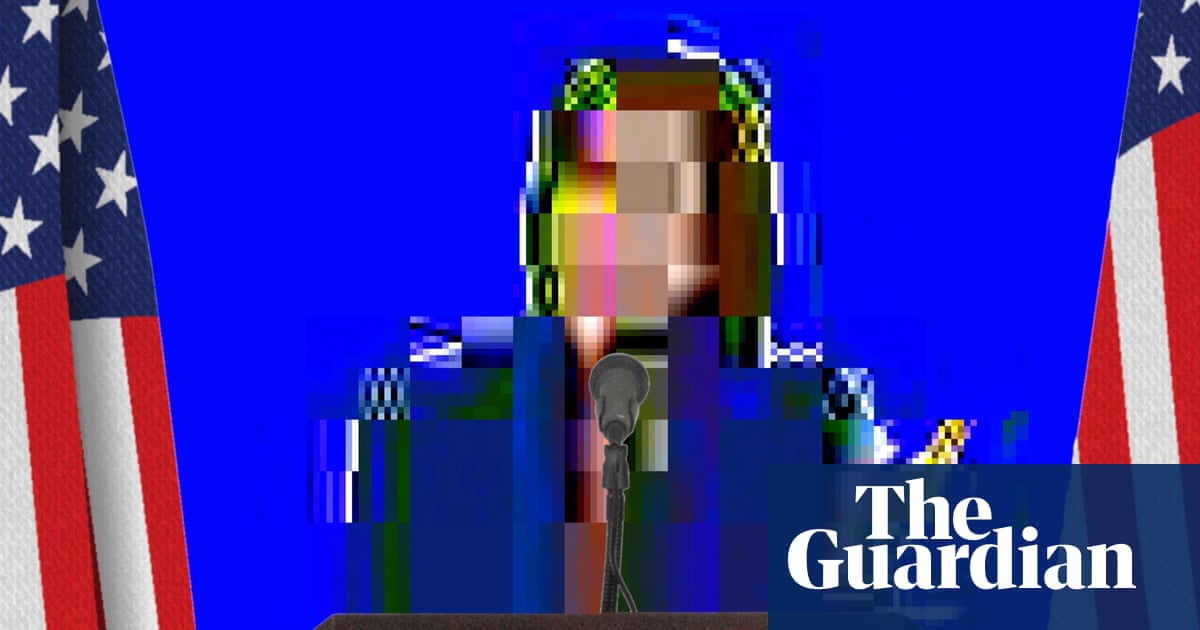
An image featuring Bianca Motley Broom, the mayor of College Park, Georgia, engaged in a kiss with a man other than her husband has gone viral on Facebook, prompting widespread circulation. However, the revelation that this image is a fabrication is catching up, but only after it reached thousands of viewers.
Motley Broom expressed her disappointment, stating, “This reflects a troubling reality about our democracy and the current state of political dialogue. It also serves to perpetuate outdated stereotypes surrounding women in leadership roles.”
When Motley Broom first began her tenure six years ago, anyone attempting to create a compromising image of a political figure would have needed some basic image-editing skills. Today, however, the tools required are as simple as a computer and a prompt for an AI-driven image generator.
The rise of deepfakes and AI-generated misinformation has raised alarms among lawmakers, advocates, and the general public alike. A poll conducted in mid-June by Rad Campaign, a digital marketing firm, alongside Women Who Tech, an organization supporting female entrepreneurs, indicated that approximately 71% of respondents are concerned about the impact of AI-generated deepfakes and misinformation on elections. Additionally, two-thirds expressed unease regarding AI's use to sexualize women.
Allyson Kapin, founder of Rad Campaign and co-founder of Women Who Tech, noted, “The results reveal that Americans prioritize concerns over AI deepfakes, electoral misinformation, and the sexual exploitation of women and children over worries about job displacement or economic impacts.”
The Trump administration has also engaged with AI imagery. Earlier this year, the White House's official account on X shared a digitally altered image of Nekima Levy Armstrong, who had been arrested during a demonstration interrupting church services in St. Paul, Minnesota. The manipulated image made her appear distressed and altered her skin tone. The White House deputy communications director later referred to this image as a “meme.”
In February, a parody account on X circulated fake images involving New York’s mayor, Zohran Mamdani, misrepresenting him and his mother alongside the infamous financier Jeffrey Epstein. Although Reuters managed to debunk these images using Google’s SynthID tool, the misinformation had already spread widely, feeding into conspiracy theories.
Despite prevalent worries about the economic ramifications of AI, concerns regarding the misuse of deepfake technology to sexualize individuals, particularly women and children, or to disrupt electoral processes, far outweigh worries about job loss, with a ratio of three to one, according to Kapin. “The public is deeply concerned.”
Georgia Democrat Senator Raphael Warnock shared in a recent Facebook video that he has also fallen victim to disinformation campaigns, with fake images misrepresenting him with health issues and an exaggerated family life, humorously noting the absurdity of having a full head of hair. He emphasized the growing challenge of differentiating between truth and deception as these tools advance, warning that they could severely disrupt democratic processes, especially right before elections.
A group of Senate Democrats, including Warnock, is exploring political strategies to counteract potential election disruptions stemming from disinformation fueled by manipulated media on social platforms. Recently, outgoing Republican Senator John Kennedy introduced a bill requiring AI companies to implement a “kill switch” for rogue AI, though it was blocked by Senator Rand Paul, who deemed the move hasty without further industry consultation.
Democratic House Minority Leader Hakeem Jeffries urged for immediate government action on AI regulations, advocating for protective measures against malicious actors. He recalled a failed amendment that sought to prevent states from controlling AI regulation as part of a larger legislative package, highlighting ongoing debates around AI in state legislatures. Some, like Tennessee, have already initiated protective legislation against AI’s manipulation of personal likeness and voice.
In most states, political campaigns that utilize AI to alter the appearances or speeches of candidates are required to include clear disclaimers, though Georgia does not have such mandates. While there is ongoing discussion among Georgia lawmakers regarding deepfake protection measures, no concrete legislation has yet been implemented.
Motley Broom believes she has been targeted by political adversaries due to her previous leadership role in the Georgia Municipal Association. “I have dedicated myself to advocating for the best interests of College Park,” she stated. While legal action for defamation under Georgia law remains an option, she contemplated the complex implications of First Amendment protections when considering how lawmakers should respond to such attacks.
“These kinds of assaults should have repercussions,” she affirmed. “I hope lawmakers will find a way to balance First Amendment rights with individual protections against utterly false claims. I genuinely hope that legislators, both at the state and federal levels, take this matter seriously, as it represents just the beginning of a larger challenge.”