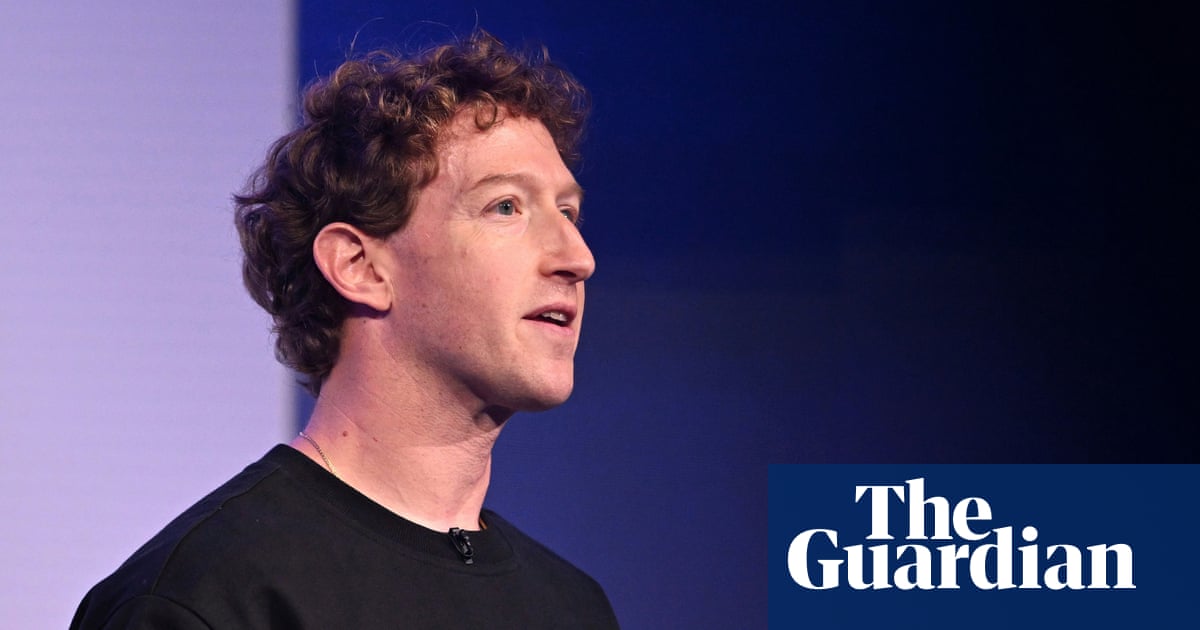
On Monday, Mark Zuckerberg shared an extensive essay outlining his perspectives on artificial intelligence and revealing Meta's future plans for the technology. This release coincided with Meta's introduction of Muse Glimmer, a new open-source AI model intended to compete with products from Anthropic and OpenAI.
In a comprehensive post exceeding 6,000 words, titled “The Future is for Everyone,” Zuckerberg covered a wide array of AI-related topics. These included discussions on data centers, governmental oversight, cybersecurity issues, the potential for bioweapons, job market changes, and surveillance capabilities. Central to his vision was the idea of AI as a personalized “superintelligence,” a concept he referenced 60 times throughout his essay.
Zuckerberg contested the notion held by some that superintelligence should be controlled by a handful of experts or entities for the greater good of humanity. “We disagree,” he stated.
He advocated strongly for open-weight AI models that are freely accessible for download, contrasting himself with rivals such as OpenAI and Anthropic. While these companies have expressed concerns about the dangers of open-source AI and maintained a more guarded approach to their proprietary products, Zuckerberg championed a less regulated, more democratic approach to AI.
As the tech community grapples with the need for regulations in AI development, the situation has become fraught with debates, including the White House’s secret framework for testing new AI models and discussions about restricting the use of open-source AI from China. Amidst the competitive landscape, Meta appears determined to carve out a place for its open models as viable alternatives to those dominating the industry.
Zuckerberg framed Meta's commitment to open-weight AI as a move towards creating a balanced power dynamic among users, whether they are individuals, corporations, or governments. He envisioned a scenario where users could influence the ethical guidelines of AI systems, rather than allowing companies to impose stringent regulations.
“If superintelligence is controlled by a limited number of individuals, businesses, or governments, it will lead to outcomes that are less beneficial for the majority,” he wrote.
In the realm of AI discussions, it's not uncommon for tech leaders to release broadly philosophical essays that also serve as marketing vehicles for their ventures. Peers in the industry, like Dario Amodei of Anthropic, Sam Altman of OpenAI, and Marc Andreessen among others, have produced similar manifestos advocating their views on the technology's potential and pitfalls.
Zuckerberg’s essay also highlighted the urgency for expanding AI infrastructure, particularly data centers. This topic has sparked significant public debate in the U.S., with growing opposition and calls for construction moratoriums. He announced that Meta would establish a fund to support local communities around its data centers, citing an example from Louisiana where teachers benefited from a bonus due to increased sales tax revenues tied to Meta's investments.
Regarding AI model testing for cybersecurity vulnerabilities—an issue brought to the forefront by recent incidents of rogue AI systems—Zuckerberg acknowledged the need for companies to collaborate by sharing training data and resources, yet provided little in-depth guidance. He cautioned that excessive regulation could allow countries like China to take the lead in AI, claiming they already have certain advantages in infrastructure development.
“Any policy that delays American AI model releases—even by a month—could pose serious risks to U.S. leadership and allow foreign models to gain an edge,” he warned.
Much of Zuckerberg’s proposed agenda lacked in-depth details and leaned on previous assertions about the promise of AI to create prosperity and innovation, claiming that everyone would eventually gain "invention superpowers" to launch new ventures. He also tied his vision closely to Meta’s offerings, such as future AI-integrated smart glasses.
“Everyone will have a highly capable personal agent that understands their goals and interests,” he explained, adding that interactions with these agents would extend across various devices, including smart glasses, fostering richer connections with loved ones in real-time.
On more contentious issues like job displacement, the rise of autonomous weapons, and governmental surveillance, Zuckerberg downplayed concerns. He argued that law enforcement already possesses significant intelligence-gathering capabilities, a trend that would be amplified with AI. Although he acknowledged potential job losses due to the technology, he emphasized that AI could simultaneously create new economic opportunities.
“Adaptation will be necessary, and it'll be difficult," he remarked about the workforce impacts of emerging technologies. "However, with personal superintelligent agents guiding us in developing new skills, this transition can be more manageable.”