On Sunday, the United States will unveil a collaborative statement with 15 other nations that outlines a unified vision for an upcoming "golden age of science," harnessing the potential of artificial intelligence. This significant announcement is set to take place in Kyoto, Japan, during the annual Science and Technology in Society Forum, which has been convening experts and policymakers since its inception in 2004.
Titled the “Kyoto Vision for a Golden Age of Science,” the statement acknowledges the positive impacts of science and technology on society and encourages research that incorporates artificial intelligence—referred to as “super intelligence” following a recent executive order by President Donald Trump.
The statement asserts, “Super Intelligence and new methods of conducting research are unlocking unprecedented opportunities for discovery,” highlighting the potential to capitalize on these transformative changes. The Office of Science and Technology Policy is being led by Michael Kratsios, who played a crucial role in crafting this vision. Notably, the statement expresses support for the emerging field of metascience, which examines the scientific method itself.
Among the officials endorsing the statement are tech ministers from Japan, South Korea, the United Kingdom, and the United Arab Emirates. Kratsios is expected to deliver a keynote address at the forum, outlining his vision of a future where laboratories operated by AI systems can swiftly design experiments and analyze results beyond human capabilities. He will assert that, “Super intelligence applied to science will be a tremendous force for democratization in research and groundbreaking innovations.”
Recently, top AI firms like Anthropic and OpenAI have initiated programs linking biomedical labs with advanced AI systems, while other companies have focused on automating lab processes for several years. Kratsios will emphasize the necessity of revitalizing the research community and establishing new foundations for knowledge and innovation, stating, “The landscape is shifting, and it is imperative to bolster our scientific enterprise.”
The vision statement also underscores the importance of public trust in the advancement of scientific innovation, advocating for “a thoughtful portfolio of funding mechanisms” to support scientific endeavors. Under the Trump administration, there have been significant attempts to cut federal funding for research, including a proposed budget for fiscal year 2027 that seeks to reduce the National Science Foundation's funding by approximately 50%.
Gretchen Goldman, the CEO of the Union of Concerned Scientists, criticized the administration for undermining scientific research, expressing that their actions have eroded public trust in the U.S. science and technology sector, especially highlighting reductions to the National Institutes of Health.
This statement is part of a broader initiative by Kratsios to reform federal incentives for scientific innovation. In July, he submitted a report to Trump proposing revisions to the funding mechanisms for research and plans to host a summit on the topic in Washington, D.C., later this week.
Additionally, Kratsios is leading the Genesis Mission, an effort launched last year by Trump aimed at catalyzing a new era of AI-driven discovery and innovation. The vision statement’s strong focus on metascience reflects a growing international trend, as noted by Jenn Gustetic from the Institute for Progress. She pointed out the momentum in metascience initiatives in the U.K. and the U.S., appreciating the global shift toward a culture of experimentation and evidence-based practice.
Earlier this month, the National Science Foundation announced the establishment of an Office of Metascience (OMS) dedicated to exploring innovative funding strategies and assessing which award mechanisms yield the best results in scientific research. Acting director Brian Stone emphasized the OMS’s commitment to being an adaptive institution that learns from its practices.
The Science and Technology in Society Forum serves as a platform for leaders to engage in discussions about maximizing the benefits of science while addressing ethical and safety concerns. Throughout the three-day event, attendees will explore the implications of AI on education, strategies for building trust in scientific research, and recent advancements in personalized medicine.
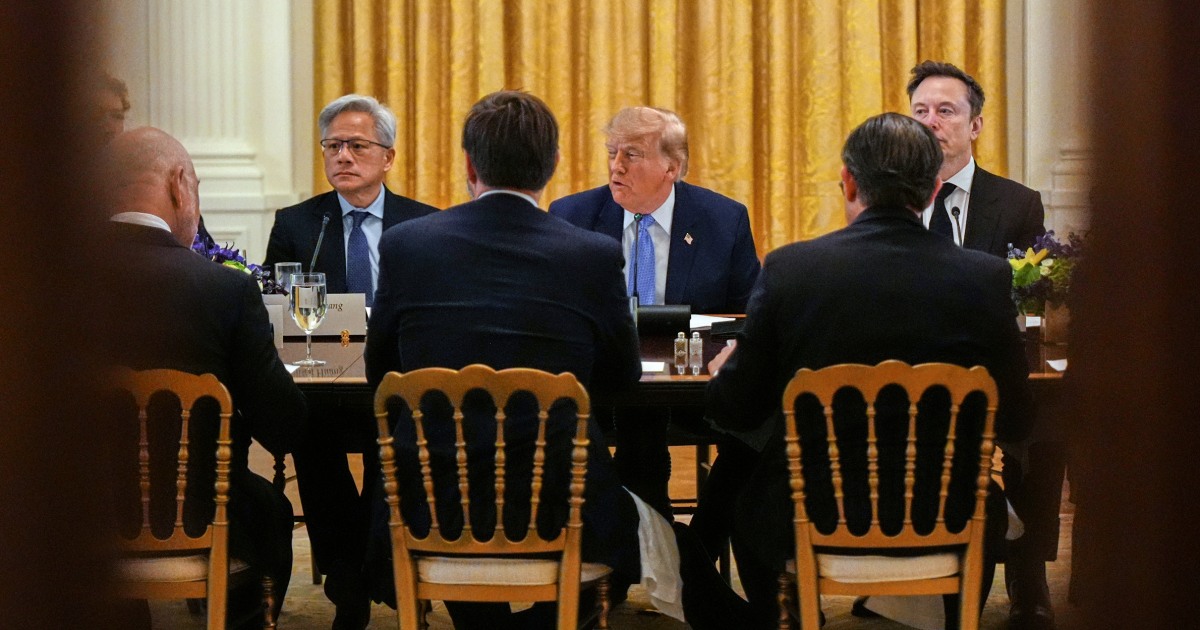
The vision statement’s release comes shortly after President Trump convened tech industry leaders at the White House to discuss how to regulate AI and mitigate associated risks. This meeting resulted in the ‘White House Accord on Super Intelligence,’ which established a four-part voluntary framework for companies to oversee their safety practices independently. Kratsios participated in that event, advocating for the development of national capabilities to manage and utilize superintelligence effectively, as he articulated at a recent United Nations Security Council gathering focused on AI.


