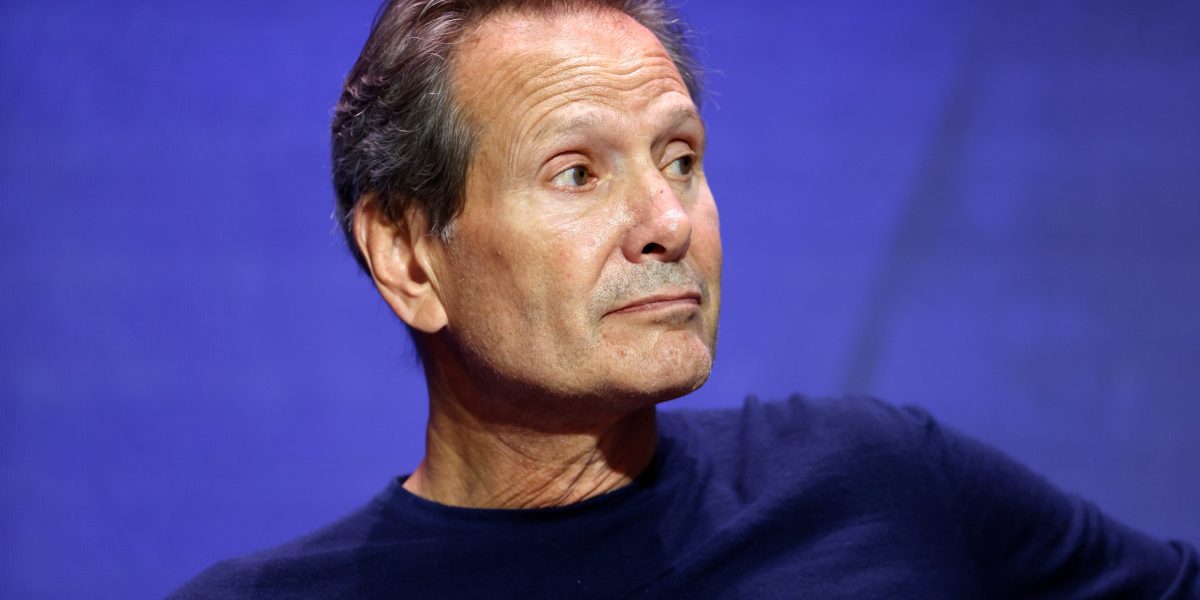
During the Ford Pro Accelerate event in Detroit, Verizon's CEO Dan Schulman shared a bold prognosis regarding the rapid evolution of artificial intelligence (AI), likening it to the onset of a significant earthquake. He expressed to Fortune's Diane Brady that "The models that we see today are the worst models we’ll ever use in our lives," emphasizing the continual and dramatic improvements occurring every couple of months. Schulman believes that artificial general intelligence (AGI)—the ability of machines to reason across various domains—could emerge within the next six to 18 months, hinting that transformative changes are just around the corner.
Beyond that timeframe, Schulman expects to witness a "quantum era" within two years, a monumental leap in capability that he described as "everything today times 1,000." By the years 2030 or 2035, he anticipates considerable developments in humanoid robotics. He summarized the next decade as one filled with intense shifts in technology and society.
Schulman warned that the impacts of AI will transpire at a pace too rapid for traditional methods of adaptation—like workforce training, labor market adjustments, and policy reform—to keep up. "Machines will, in many ways, outperform human tasks," he stated, anticipating significant disruption ahead. He predicted the 21st century, as we know it, might "collapse" within the next five to ten years, noting that achievements expected over a century could unfold within this short timeframe. "We can't fully grasp how powerful this technology will be," he explained.
The changes, Schulman noted, will also deeply affect Verizon itself. With over 250,000 employees and contractors, the company will undergo a transformation from a workforce built on rigid roles to a more adaptable organizational structure. Acknowledging the inevitable influx of advanced technologies, he stressed the importance of preparing for possible challenges in the labor market rather than assuming everything will naturally adapt.
Recently, Verizon announced a $70 million initiative aimed at training American workers—not just those within the company, but across communities nationwide. This program offers free AI training and collaborates with local organizations to foster career development. Schulman urged leaders and policymakers to proactively consider the potential pitfalls of technological advancements and to devise strategies that minimize associated risks.
“Everyone's job will evolve,” he cautioned, expressing concern that not everyone will find themselves in an improved situation following these changes. Other executives alongside Schulman underscored various limitations that AI's rise might present, emphasizing the essential tasks that will continue to require a human touch.
PG&E CEO Patti Poppe highlighted the need for a workforce that not only possesses technical skills but also physical competencies, especially as the energy grid becomes increasingly digital. She illustrated this by recounting a scenario where workers must skillfully maneuver in challenging environments, even as new technologies like sensors and predictive analytics transform grid management.
Trane Technologies’ CEO Dave Regnery encouraged workers to welcome AI, likening current apprehensions about the tech to past fears surrounding personal computers. He views AI as an opportunity to optimize building operations rather than just a means to reduce staffing. His firm is leveraging AI to fine-tune systems like heating and air-conditioning in alignment with real-time building usage, potentially increasing energy efficiency significantly and fostering demand for skilled technicians.
Similarly, Chris Nelson, CEO of Stanley Black & Decker, described how AI is reshaping construction sites. His company has developed autonomous drilling robots, designed to handle repetitive tasks while allowing skilled tradespeople to focus on intricate jobs that demand judgment and expertise. Nelson depicted AI as a collaborative tool, enhancing rather than replacing human labor in construction.
In contrast, Dycom CEO Dan Peyovich highlighted a pressing issue: the struggle to find sufficient talent to build the necessary telecommunications infrastructure. His strategy focuses on improving worker benefits and establishing training facilities that encompass a range of skills beyond technical know-how, reinforcing a long-term career path for employees in challenging field roles.
Throughout the discussion, Schulman fostered a collegial atmosphere, acknowledging diverse perspectives on the future of work while maintaining his stance that business leaders must be proactive and prepared for turbulent changes ahead. He concluded with a call for scenario planning to ensure a skilled workforce is available, ready to adapt as the landscape shifts.