In New York City, a startup named Shift Robotics is shaking things up by offering free apartment cleaning services — with an interesting twist. The catch? The cleaning crew dons head-mounted cameras that capture their every move, including washing dishes, mopping floors, and folding laundry. This footage is then utilized as training data for artificial intelligence labs and robotics companies.
The company was relatively obscure until its recent launch video skyrocketed to popularity, amassing over 8 million views almost overnight. According to Harry Kilberg, Shift's US General Manager, the initial offering of 250 cleaning sessions was fully booked in no time, reflecting an overwhelming demand with countless users eager to book a service.
Shift represents a broader trend as AI firms seek real-world data to transition from basic chatbots to machines capable of performing tasks in domestic and industrial settings. Notable figures in the tech world, like Sam Altman, have voiced ambitions to make robotics a pivotal focus, with major players such as Nvidia, Meta, and Tesla also investing heavily in this field.
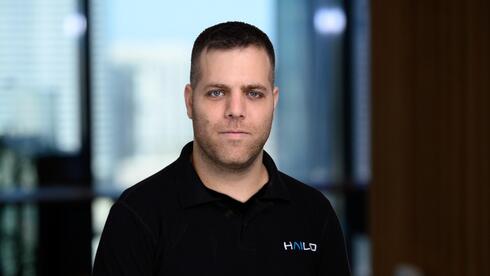
Kilberg, who features prominently in the launch video, anticipated the enthusiastic reaction. "We recognized that this idea could be transformative, so we believed it would capture attention," he remarked.
The startup operates under microagi, a research lab that originated in a Munich hacker space last year and is dedicated to developing "end-to-end physical AGI," or artificial general intelligence for machines to function effectively in the real world. Founded by Bercan Kilic and Yoan Iliev, both with backgrounds in Formula One aerodynamics, alongside Anton Poletaev, a former researcher at The Alan Turing Institute, microagi is swiftly establishing itself in the AI landscape.
According to Kilberg, Shift is active in 15 countries, boasting a network of around 14,000 operators tasked with gathering real-world data. He described the platform as a marketplace aiming to transition society toward an economy where essential goods and services become more plentiful and accessible.
Despite advancements, Kilberg acknowledged that reliable household robots remain a distant goal. Until then, they rely on individuals to generate the valuable data that these future systems require for their learning processes.
Data collection has emerged as a significant challenge for both startups and established tech giants hoping to elevate AI applications from mere chatbots to functional robots. While large language models are trained on extensive datasets of text and images, no equivalent dataset for robotics currently exists, prompting the industry to build one from the ground up using gig workers to document the tasks these future machines will perform.
With the proposition of complimentary cleaning services, a natural question arises: Is the business model sustainable?
Kilberg asserts, "The unit economics are much more favorable than you might expect." The in-house technology at microagi enhances the quality of the data collected, allowing them to fetch a premium price when sold to AI labs and robotics companies. Moreover, faces and screens are automatically obscured in the footage to protect privacy, and audio is not recorded. Some of this data is also utilized for microagi's internal research purposes.
The idea behind Shift's launch stemmed from initial users who were already documenting their household activities and wished to extend their efforts. "They started putting up flyers in their buildings offering to clean for neighbors, with us covering the cost," Kilberg explained.
Others ventured into local bodega stocking or volunteer work at soup kitchens, all while documenting their contributions. Kilberg didn't disclose the payments made to those recording their chore activities.
New York City is merely the starting point for Shift. Kilberg mentioned plans to broaden their footprint across the U.S. and introduce additional free or subsidized services, including cooking and plumbing.
Shift fits into an expanding sector focused on collecting real-world data. Companies like Scale AI, Turing, and micro1, which previously supplied data for the chatbot boom, are now shifting their attention toward gathering physical-world information. Their aim is to bridge what UC Berkeley roboticist Ken Goldberg refers to as the "100,000-year data gap," highlighting the disparity between the capabilities of chatbots and those of robots due to insufficient real-world training data.
As Shift continues to diversify its service offerings, the value of its footage grows. AI labs and robotics companies require training data from a broad spectrum of tasks and environments to help robots adapt to the complexities of the real world.
Additionally, geographic diversity is a key focus for Shift. Kilberg noted that the company is active in regions where few competitors are engaged in data collection, such as Bulgaria, Georgia, and South Africa, with notable popularity in Turkey.