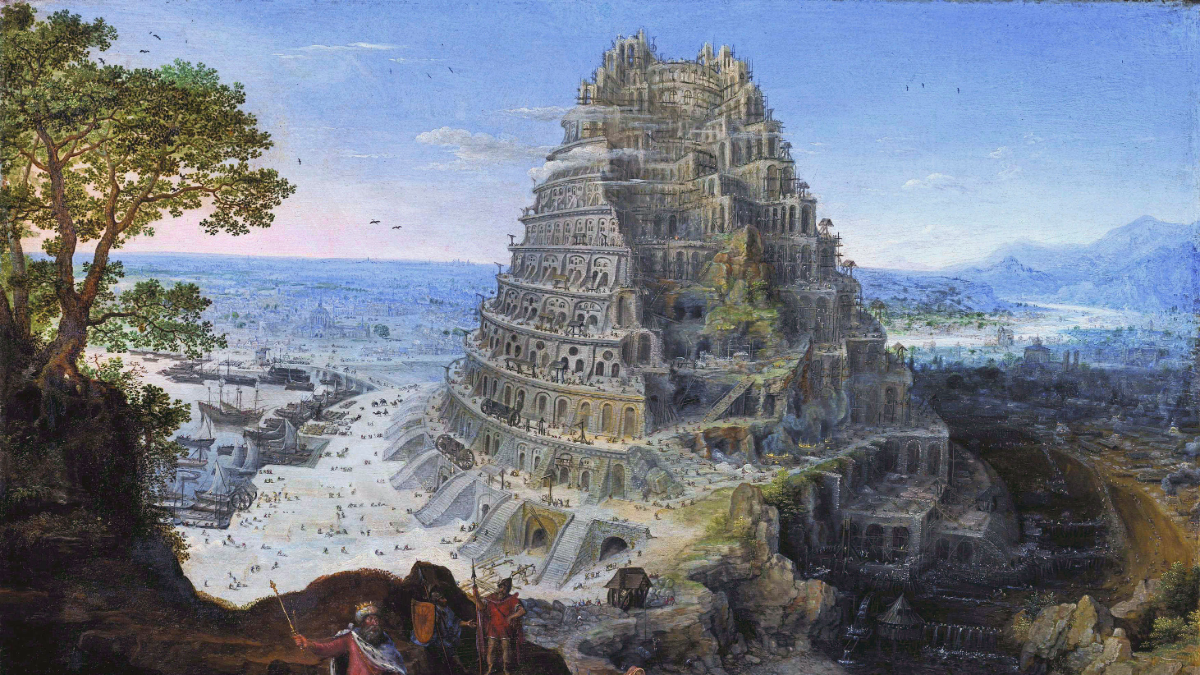
Jules Polonetsky and Omer Tene, editors of the Cambridge Handbook of Consumer Privacy, delve into an age-old narrative about the relationship between technology and human ambition, drawing parallels to contemporary advancements in artificial intelligence.
The biblical story of the Tower of Babel, described in Genesis, illustrates humanity's collective quest for greatness. On the plain of Shinar, people spoke a single language and sought to construct a tower that reached the heavens, aiming for a legacy and unity. However, when God observed their endeavor, He scattered them by confusing their language, demonstrating the dangers of unchecked ambition and hubris.
Pope Leo XIV references this cautionary tale in his encyclical *Magnifica Humanitas*, presenting a dualistic view of our current technological landscape—namely, the developing field of artificial general intelligence (AGI). He juxtaposes the idea of constructing a new Tower of Babel with that of rebuilding Jerusalem’s walls alongside Nehemiah. This metaphor is particularly poignant, considering Pope Leo’s namesake, Pope Leo XIII, who faced the consequences of the Industrial Revolution. Regardless of one's religious beliefs, the metaphor is relevant, as creators of AGI today might replicate the pitfalls of Babel.
From a Jewish perspective, the tale diverges from its simplified moral lesson against arrogance. Rabbis have explored this narrative for two millennia, drawing out poignant interpretations that resonate with modern concerns. One critical lesson is the objectification of individuals in pursuit of greater goals. In *Pirkei d'Rabbi Eliezer*, the Rabbi's commentary highlights that the construction of the tower became so consuming that the deaths of workers were disregarded. A worker's death evoked no reaction compared to the sorrow felt over a broken brick, emphasizing when materials take precedence over human life—a reflection of today's employment landscape as AI increasingly automates roles traditionally held by individuals, transforming workers into mere statistics.
The implications are profound. As AI reshapes industries, the focus may shift towards efficiency at the expense of human consideration. This potential shift includes not just the elimination of jobs, but also raises ethical concerns about autonomous systems capable of making critical choices, the encroachment of surveillance technology, and the unresolved debates surrounding the military use of AI. The recent tensions between tech firms like Anthropic and governmental bodies highlight the ongoing struggle to define the boundaries of AI’s applications.
Pope Leo further critiques this dynamic, referring to it as a form of idolatry. The cautionary stance discussed by writer Yuval Levin—particularly in his exploration of Psalm 115—emphasizes the danger of creating beings that mimic human intellect but lack essential human attributes like empathy and compassion. By placing trust in such constructs, we risk becoming detached from our humanity.
Another interpretation of the Babel story addresses power dynamics; the builders aimed to prevent dispersion across the Earth. They sought to create a singular identity and structure, a stark contrast to the divine intention of diversity. Medieval commentator Nachmanides noted that while humanity was meant to flourish across various nations and cultures, the architects of Babel attempted to impose uniformity. The encyclical invokes Rabbi Jonathan Sacks, who viewed Babel as a critique against centralized power, suggesting that the formation of diverse nations and languages was not a consequence of sin but a necessary part of the moral fabric of humanity.
Today's development of AI mirrors this framing; a small group of corporations and governments now possess most of the resources and expertise necessary for shaping its future. This concentration threatens to centralize control in ways that could be detrimental, potentially undermining societal stability and democratic governance. As AI regulations emerge globally, differing approaches highlight the varying priorities of diverse populations, reinforcing the necessity of avoiding a monolithic ethical framework.
Moreover, Babel cautions us about the risks of complexity. While diversity can protect against the pitfalls of centralization, it can also lead to confusion where no shared understanding exists. The biblical narrative indicates that this disarray can lead to violence and discord among people. In constructing advanced AI, there’s a risk not just of misalignment with human values, but also of creating systems so convoluted that we lose the ability to comprehend their operations. This opacity may leave humanity subservient to forces they cannot control or even understand, diminishing the capacity for informed governance or accountability.
Pope Leo presents us with the choice: navigate towards Babel or pursue Jerusalem. The lessons from the rabbis echo across time, warning us against valuing material over humanity, concentrating power excessively, and building systems beyond our comprehension. The builders of Babel failed in all three aspects, and history has highlighted these failures. As we advance towards presumably unparalleled innovations in AI, we face the challenge of ensuring that we do not repeat their mistakes and risk unraveling the fabric of our society.


/Amazon%20-%20Image%20by%20bluestork%20via%20Shutterstock.jpg "Amazon Resizes Its Artificial General Intelligence Team, Viewing It as a Reset Rather Than a Retreat.")
