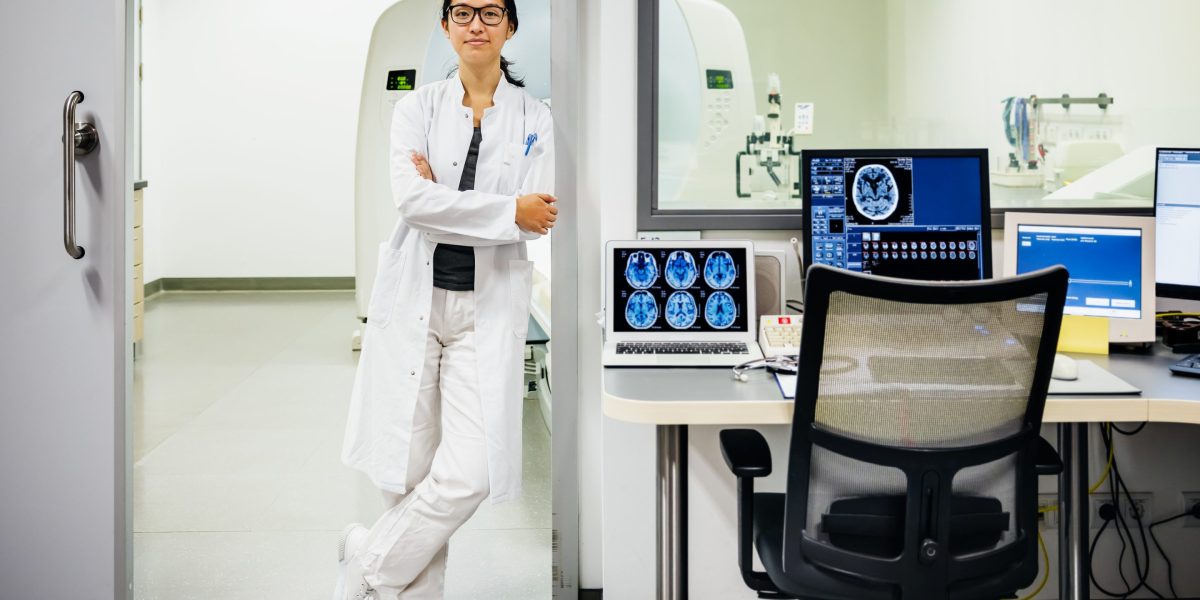
In 2016, Geoffrey Hinton, widely regarded as the "Godfather of AI," took the stage at a Toronto machine learning conference and controversially predicted that artificial intelligence would soon render the radiology profession obsolete. He urged a halt in training new radiologists, arguing that it was clear AI would outperform humans in tasks like reading scans and compiling reports within five years, at most ten. Hinton likened radiologists to "the coyote that’s already over the edge of the cliff but hasn’t yet looked down."
For years, experts in the tech field, including Hinton, cautioned that AI could fiercely disrupt job markets, particularly in areas where tasks are predictable and repetitive. However, against the backdrop of these ominous predictions, the reality in radiology has turned out rather differently. Hinton even revisited his earlier stance last year, explaining that his comments were specifically about image analysis and expressing that the future likely involves collaboration between AI systems and human radiologists to enhance productivity and effectiveness.
According to Christoph Herpfer, an economist and professor at the University of Virginia's Darden School of Business who researches healthcare finance and physician job markets, the number of active radiologists in the United States has actually increased by approximately 10% over the past decade. "We are facing a significant shortage of radiologists, which is the exact opposite of the initial predictions," he noted.
The steady rise in demand for healthcare services, particularly as the population ages and more individuals gain health insurance through the Affordable Care Act, has bolstered career opportunities in this field. Concerns about AI displacing human roles have been a hot topic; several tech firms, including Snap and Block, have cited AI innovations as a reason to let thousands of employees go. Meanwhile, Anthropic CEO Dario Amodei had once warned that AI could potentially eliminate half of all entry-level white-collar jobs by the next five years. However, he has recently shifted his perspective to suggest that AI might not only replace jobs but also transform and broaden certain roles.
As of May, there were 7,469 active job postings for radiologists, with 1,470 positions remaining open for more than 60 days, according to RadBoard.io, a recruiting platform focused on radiology. This shortage has led to a notable rise in average radiologist salaries, which have climbed to $571,000 by 2025—an increase of 9% year-on-year.
Where once AI experts foresaw the eradication of radiology as a career, many industry leaders have recently softened their predictions. Jensen Huang, CEO of Nvidia, commented on the Dwarkesh Podcast that those predicting doom for the field are failing to distinguish between the task of scan interpretation and the broader responsibilities of radiologists. Similarly, Reed Hastings, cofounder of Netflix, pointed out that while AI may influence roles, it does not necessarily equate to total replacement, specifically referencing radiology as an example. "We’re quick to envision scenarios of AI obliterating certain jobs, but it’s yet to happen in radiology," he noted.
Several systemic barriers exist that would prevent AI from fully taking over radiology in the near future. For example, Medicare and Medicaid reimbursements require that a licensed physician performs the final analysis of radiology studies. Additionally, the accountability for diagnosing errors poses challenges for integrating AI fully into the workflow.
Moreover, reading images is just one facet of a radiologist’s duties. These professionals engage with other physicians, monitor patients, and some perform interventional procedures, which require human interaction and judgment. By automating certain tasks like scan assessments, physicians can allocate more time to these other responsibilities, according to Herpfer.
The uptick in requests for scans, partly driven by FDA-approved AI tools that expedite imaging processes, has kept radiologists busy. From 2018 to early 2025, case volumes in radiology surged by 25%, as reported by the Journal of the American College of Radiology. Dr. Jeff Chang, a former ER radiologist and cofounder of the AI healthcare startup Rad AI, discussed the overwhelming nature of radiologists' workloads, underscoring the technology's design to assist rather than replace.
Dr. Tonie Reincke, an interventional radiologist based in Texas, pointed out that AI lacks the human qualities essential in patient care, such as empathy and compassion. She expressed concern that the rhetoric surrounding AI's potential to supplant radiologists might deter future medical students from entering the field, especially given the rigorous nature of radiology training which typically spans five to six years.
Herpfer highlighted an important takeaway from the situation in radiology, noting that similar patterns were observed in the accounting profession after the advent of spreadsheet software in the 1990s. Instead of being obsolete, accountants adapted to focus on higher-level advisory roles as their routine tasks were automated. "Unless AI achieves a significant breakthrough towards becoming Artificial General Intelligence, most jobs in the foreseeable future are likely to remain secure," he concluded, using radiology as a case study.
This narrative underscores a broader trend—the integration of AI into professional fields is more about augmentation than replacement.


