AIR Security, a cybersecurity firm specializing in a security platform tailored for the supply chain of AI agents, has successfully secured $50 million in funding led by Sequoia Capital and Greenoaks Capital. Additional contributions came from Swish Ventures and Netz, alongside prominent individual investors such as Zach Frankel (President of Cognition), Yinon Costica (Co-founder of Wiz), Ofir Ehrlich (Co-founder of Eon), Anne Neuberger, Omer Adam, and Varun Anand (Co-founder of Clay), among other notable figures from the cybersecurity and AI sectors.
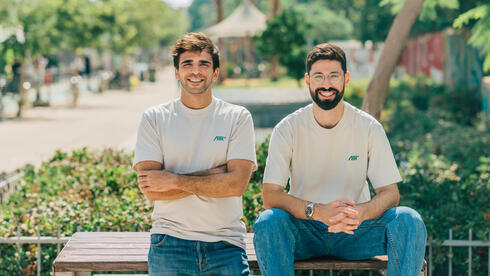
AIR Security, emerging from stealth mode concurrently with this funding announcement, was founded in February 2026 by Yair Saban and Niv Hoffman. The two co-founders have a decade-long connection that dates back to their military service, and they bring a wealth of experience in offensive cybersecurity, enterprise infrastructure, and AI security research.
Currently employing a team of 40 in Israel, AIR is focused on establishing a dedicated research lab for AI and the behaviors of AI agents. The company has appointed Ryan Knisley, the former Chief Information Security Officer for The Walt Disney Company and Costco Wholesale, as its Chief Strategy Officer.
The substantial size of this funding round is noteworthy, considering AIR's recent establishment. The company's strategy hinges on the growing reliance of enterprises on AI agents for crucial tasks, highlighting the pressing need for a new layer of security to safeguard the tools, information, and instructions these agents interact with.
AIR Security characterizes this need as an "inline firewall" for AI agents, designed to protect the content that enters an agent's context rather than merely restricting the agent's capabilities. As enterprises increasingly deploy AI agents capable of interfacing with various tools, data, and third-party services—enabling them to browse websites, read emails, and execute tasks on behalf of employees—the security landscape becomes more complex.
This complexity introduces substantial security challenges; malicious content or compromised tools could sway an agent's actions, leading to risks like data theft, fraud, and unauthorized access. Unlike standard software, AI agents make decisions based on the information they process while executing their tasks, complicating security oversight.
"Every enterprise has a firewall protecting its network. Now, they need one protecting their AI agents,” stated Saban, emphasizing the necessity for specific protections designed for AI contexts. He believes that AI agents pose a hedged risk, with organizations increasingly relying on them while simultaneously granting more permissions.
However, Saban argues that merely expanding permission is not the primary concern. "The true danger arises from exposure to malicious information," he noted, identifying three main sources of this risk: installed extensions or tools, potentially fraudulent websites, and sensitive internal organizational data.
AIR's research initiatives have revealed alarming trends, such as over 17,800 public AI add-ons linked to nearly 6.7 million installations reliant on unverified external sources. In another investigation, AIR identified fraudulent AI Skills masquerading as trusted brands, capable of executing malicious code on enterprise systems.
In response, AIR has created a real-time firewall solution aimed at filtering the information that enters an AI agent's context, blocking harmful instructions and untrusted data before they can shape the agent's decisions. This platform continuously assesses Skills, plugins, and other add-ons associated with an organization's AI agent supply chain, both pre- and post-deployment. If a malicious or unauthorized add-on is discovered, AIR enables security teams to track dependent agents and workflows, facilitating prompt remediation across the organization.
Furthermore, the company plans to launch a marketplace featuring pre-vetted and certified add-ons, allowing enterprises to enhance their agents securely. "We began selling to major companies and have already onboarded some significant clients," Saban remarked. The firm has also initiated hiring in the United States, including a senior executive from Disney.
As AIR enters a market poised for rapid change, with a rising number of startups in AI security, Saban recognizes the need for differentiation. The firm focuses on preventive measures rather than reactive solutions after an agent has been compromised, setting it apart from competitors.
"The simplicity of software development has lowered significant barriers, resulting in many newcomers,” he noted, asserting that AIR's commitment to prevention is a key differentiator. He further stated that the technology underpinning AIR's security engine is complex and difficult to replicate, giving them a competitive edge through accumulated expertise and a distinct approach to security.
The new funding will be used to expand AIR's operations and accelerate its commercial endeavors, as they position themselves at the forefront of AI security innovation.