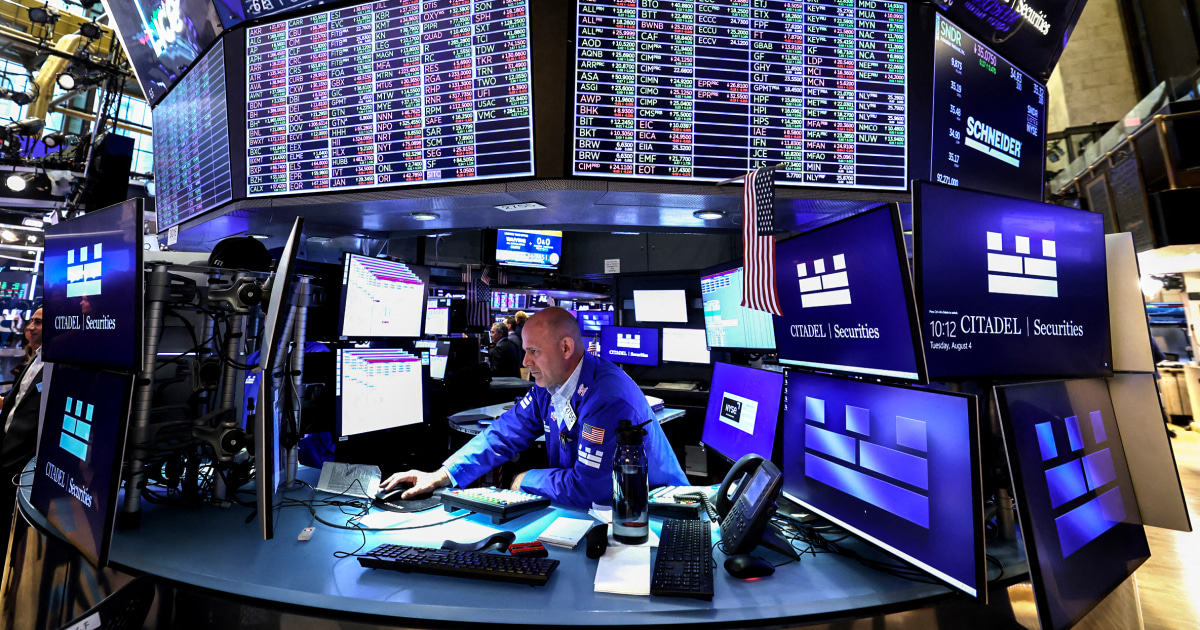
On Tuesday, both the S&P 500 and the Dow Jones reached record levels, buoyed by optimistic projections from Caterpillar and Palantir that reassured investors about demand driven by artificial intelligence. Additionally, expectations for a near resolution to the ongoing conflict in the Middle East contributed to a decline in crude oil prices.
Palantir Technologies experienced a remarkable 26% surge in its stock value after revising its annual revenue forecast upwards once more. Caterpillar, pivotal for gauging the health of the global industrial sector, saw its shares rise by 5.8% following an improved revenue growth forecast, aided by the increasing demand for its construction and power-generation equipment due to the expansion of AI data centers.
This earnings season, investors have been closely analyzing companies associated with AI, seeking evidence that their substantial investments are beginning to pay off. The reassuring results from leading AI firms like Microsoft and Amazon last week have fueled upward momentum on Wall Street after a rough July.
Eric Parnell, chief market strategist at Great Valley Advisor Group, highlighted the impressive performance in AI earnings but pointed out the crucial question investors face: sustainability. He noted that should it prove sustainable, distinguishing the market's winners from the losers would be essential.
The semiconductor sector also saw gains, with the Philadelphia Semiconductor index climbing by approximately 5.8%. However, shares of major hyperscalers presented a mixed picture; Amazon's stock dipped by 2% after a recent surge, while Microsoft enjoyed a 2% increase.
In addition, the S&P 500's technology sector rose by 3.5%, helping to counterbalance broader declines across the index, where seven out of eleven sectors were in the red.
On the geopolitical front, crude oil prices dropped nearly 4% after reports from a Qatari official indicated that diplomatic efforts to resolve the conflict were ongoing. U.S. Treasury Secretary Scott Bessent also mentioned that a possible agreement with Iran regarding the reopening of the Strait of Hormuz could materialize as early as Tuesday or Wednesday.
At 11:37 AM Eastern Time, the Dow Jones Industrial Average had climbed by 768.56 points, or 1.44%, reaching 53,946.83, while the Nasdaq Composite rose by 478.21 points, or 1.85%, to 26,392.10. The S&P 500 gained 98.24 points, or 1.29%, hitting a record high of 7,698.74—the first such milestone since June.
This earnings period has exceeded historical averages, with 85.2% of the 304 S&P 500 companies that have reported second-quarter results as of Friday surpassing estimates, compared to the long-term average of 67.5%.
In another development, Elon Musk's SpaceX is set to release its first earnings report since going public, with its shares showing a 4% increase. Meanwhile, stocks of U.S. photonic companies Coherent and Lumentum jumped 14% and 10%, respectively, following reports that the Trump administration is preparing a ban on imports of new models of Chinese data center components.
Despite reporting lackluster results, McDonald's saw a 1.6% uptick in share prices, while Pfizer's stock rose by 1.1% after announcing positive quarterly results.
On the economic data front, job openings fell in June, largely attributed to a significant downturn in the healthcare and social assistance sector, but an uptick in hiring figures and low layoff rates indicated that the labor market remained robust.
Traders currently anticipate a 58.6% probability of an interest rate hike by the Federal Reserve in September, according to the CME Group's FedWatch Tool.
Overall, advancing stocks outnumbered declining ones by a ratio of 2.11-to-1 on the NYSE and 2.57-to-1 on the Nasdaq. The S&P 500 recorded 18 new 52-week highs and three new lows, while the Nasdaq Composite noted 92 new highs and 38 new lows.


