Beginning this week, Robinhood is introducing advanced trading agents for its approximately 29 million users, powered by technology from OpenAI and Anthropic. Users can select from multiple AI models, allowing them to engage in trading, perform market research, and formulate intricate investment strategies through simple commands.
This initiative aligns with Robinhood's annual HOOD summit and follows the introduction of a tool in May that enables tech-savvy users to connect their own trading agents to the platform.
As artificial intelligence continues to infiltrate various sectors of finance, Robinhood stands out as the first brokerage to provide easily accessible trading agents for a vast retail audience. This development could revolutionize investment practices among everyday Americans and potentially influence broader market dynamics.
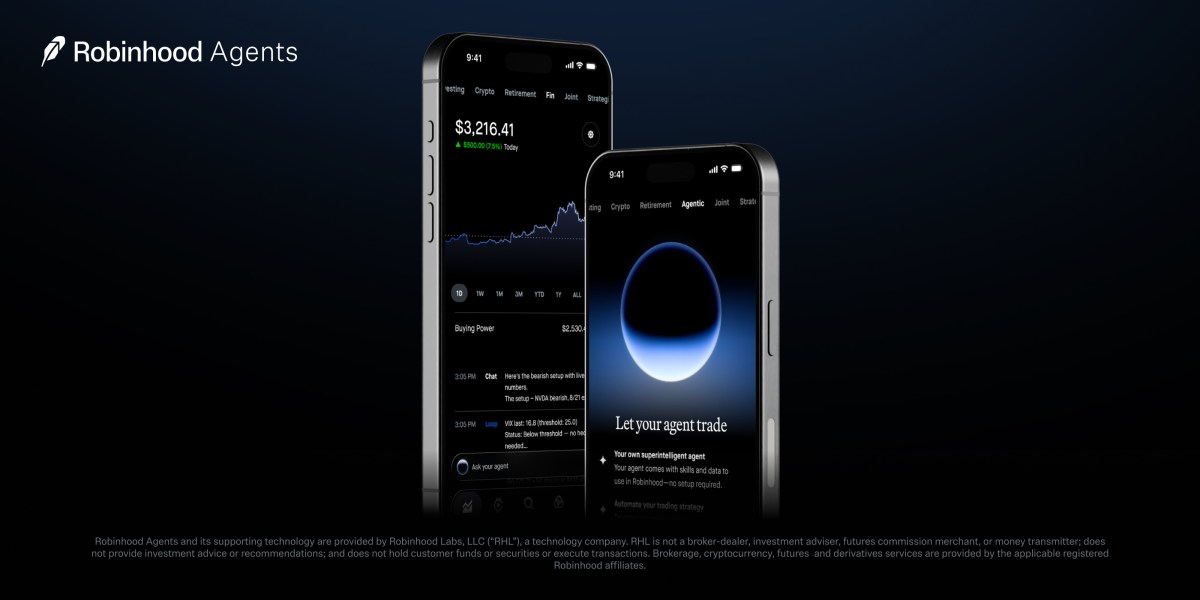
In a demonstration shared with Fortune, a Robinhood user was prompted to name their chosen agent, then pick one of OpenAI’s GPT-6 Luna, GPT-6 Sol, or Anthropic’s Opus 4.8. After setup, users could communicate in plain English, directing the agent to perform tasks ranging from straightforward trades like “Buy $200 of Ford stock” to more sophisticated instructions. For instance, users can set a “Loop” function that checks the market daily and executes trades when specific criteria are met, or implement algorithms to spot opportunities overnight.
To ensure user safety, Robinhood's new service includes several preventive measures, such as offering dedicated trading accounts for agents and allowing users to set trading limits. Additionally, users can opt for a confirmation step where the agent must seek approval before finalizing any transactions.
As part of this initiative, users will also receive complimentary access to various data resources, including Unusual Whales and the cryptocurrency platform Token Terminal, for a limited duration.
Robinhood’s executives conveyed to Fortune that by offering user-friendly agents alongside extensive financial data, they are providing tools that could rival those used on Wall Street. This development is seen as a significant stride towards their mission to democratize finance. "Ownership relies on markets, and markets depend on traders," stated Robinhood CEO Vlad Tenev. "We’re making Robinhood the premier destination for active traders by providing tools historically reserved for hedge funds and major financial institutions."
However, the widespread adoption of trading agents could lead to unforeseen changes in investment behavior, such as an increase in active trading volumes or the emergence of new trading methods. There are concerns that agents might collaborate and simultaneously shift investments in ways that could trigger increased volatility or even panic in the market.
Questions remain regarding legal responsibilities associated with agent-driven trading. Robinhood maintains that offering these agents does not equate to supplying financial advice, equating the interaction to asking the internet or a friend for guidance. Nevertheless, the legal framework surrounding AI and trading agents is still evolving.
Another consideration is the cost to customers for utilizing these trading agents. During the initial rollout, Robinhood will offer the lower-end GPT-6 Luna at no charge until the year's end, while the standard fees will apply for other OpenAI and Anthropic models. Executives suggest that the expense for most users will be minimal, but potential fluctuations in computing costs or the adoption of research-heavy trading strategies could alter this outlook.
There’s also uncertainty surrounding how many users will embrace the trading agents actively. Early indicators are promising; over 150,000 customers have opened agent accounts with Robinhood’s earlier, more technical iteration, and agents reportedly handle transactions on the platform nearly 30 million times per day.
Currently, Robinhood is the only major brokerage offering accessible trading agents at scale. However, other fintech and cryptocurrency platforms, including eToro, Public, and Coinbase, allow users to connect agents via MCP tools. It’s likely that these companies will soon introduce trading agents directly in their platforms, with traditional brokerages like Schwab and Fidelity likely to follow suit.
Looking ahead, the prospect of agents executing billions of trades daily and enabling regular investors to implement complex strategies could reshape the investment landscape. The impact on market performance and wealth distribution remains to be fully realized.