For over 150 years, the aspiration of predicting earthquakes has remained elusive for seismologists. Despite advancements in technology and understanding, the U.S. Geological Survey's official stance remains firm: “No. Neither the USGS nor any other scientists have ever predicted a major earthquake [...] and we do not expect to know how any time in the foreseeable future.”
However, not all is lost. Recent research involving machine-learning algorithms has analyzed intricate tectonic strain data from California's San Andreas Fault. This work has uncovered previously unrecognized "slow-slip events," which researchers believe could impact the timing and occurrence of low-frequency earthquakes (LFEs). Experts in the field are enthusiastic about this discovery, referring to the improved comprehension of these slow tectonic movements—often too subtle to detect from the surface—as a potential "revolution" in earthquake science since they can trigger significant large earthquakes. By grasping the mechanisms of these slow-slip occurrences, this new research brings scientists closer to deciphering early warning indicators for substantial seismic events.
The lead author of the study, geophysicist Zahra Zali, expressed, “We wanted to know if crucial slow displacement processes might be concealed within years of continuous deformation measurements. Artificial intelligence has allowed us to identify their patterns, which otherwise would have gone unnoticed.”
An ‘aseismic’ shift refers to the manner in which faults relieve the stress that accumulates on tectonic plates. This release can occur rapidly through a seismic event or slowly via an “aseismic” slip, which can persist from minutes to months, as Zali and her co-authors detailed in *Nature Communications*. Traditionally, these slow slips have been challenging to study because they do not generate the seismic waves that seismometers capture, leaving them largely misunderstood until now.
Zali noted that the difficulty in detecting these events arises from their subtlety and their tendency to be obscured by complex background noise. As Chris Marone from Penn State observed in 2019, LFEs and slow slips were deemed "non-existent and theoretically impossible" just a short while ago.
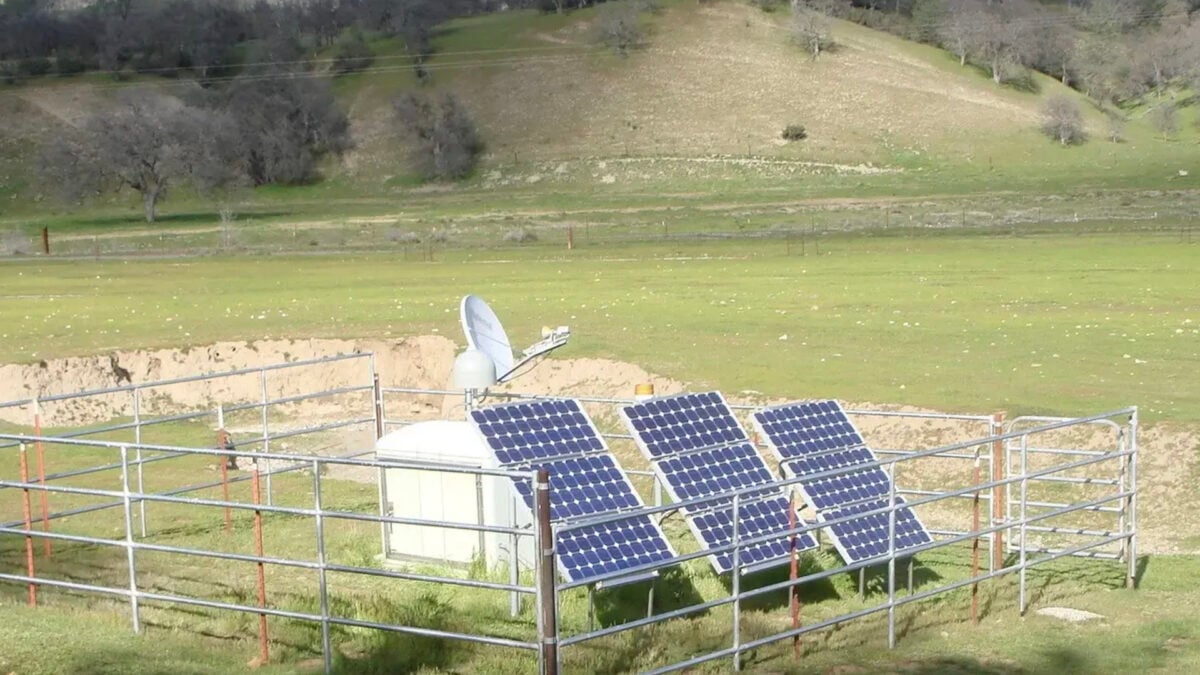
The research team, which included collaborators from Germany and the United States, gathered continuous daily measurements through boreholes along the Parkfield section of the San Andreas Fault. They employed sensitive strainmeters that detected subtle shifts in the deep rock formations over periods ranging from seconds to weeks. This extensive dataset, covering eight years from 2009 to 2016, was ideal for deep learning AI to analyze and find patterns. Their findings indicated that many slow-slip events coincided with nearby LFEs, defined as occurring within 10 kilometers of each other and at a depth of less than 20 kilometers.
“Our results indicate that these ‘earthquakes in slow motion’ are not isolated occurrences, suggesting that slow slipping significantly influences the stress dynamics along active faults,” explained co-author Patricia Martínez-Garzón, a professor of applied seismology at GFZ.
Going forward, Zali and her colleagues aim to extend their AI analyses to other fault lines, to further validate the connection between slow slips and more powerful seismic activity. Currently, their research area had a wealth of data on California LFEs—about 500,000 mini-quakes recorded—while only 92 slow-slip events were identified at Parkfield.
Zali emphasized that detecting these seemingly tranquil precursors to larger seismic events is vital in understanding how stress accumulates along fault lines, potentially leading to natural disasters later on.
“Many significant faulting processes occur without causing damaging earthquakes,” Zali pointed out. “By uncovering these hidden indicators, we can develop a more comprehensive understanding of fault behavior between earthquakes and how stress propagates through the Earth’s crust.”


