OpenAI is stepping into the hardware arena with the launch of its inaugural branded device amidst ongoing speculation about its development of a personalized smart speaker and additional tech products. The Codex Micro, priced at $230, is a unique mini-keyboard featuring RGB lighting that enables users to effortlessly monitor and engage with multiple Codex agents.
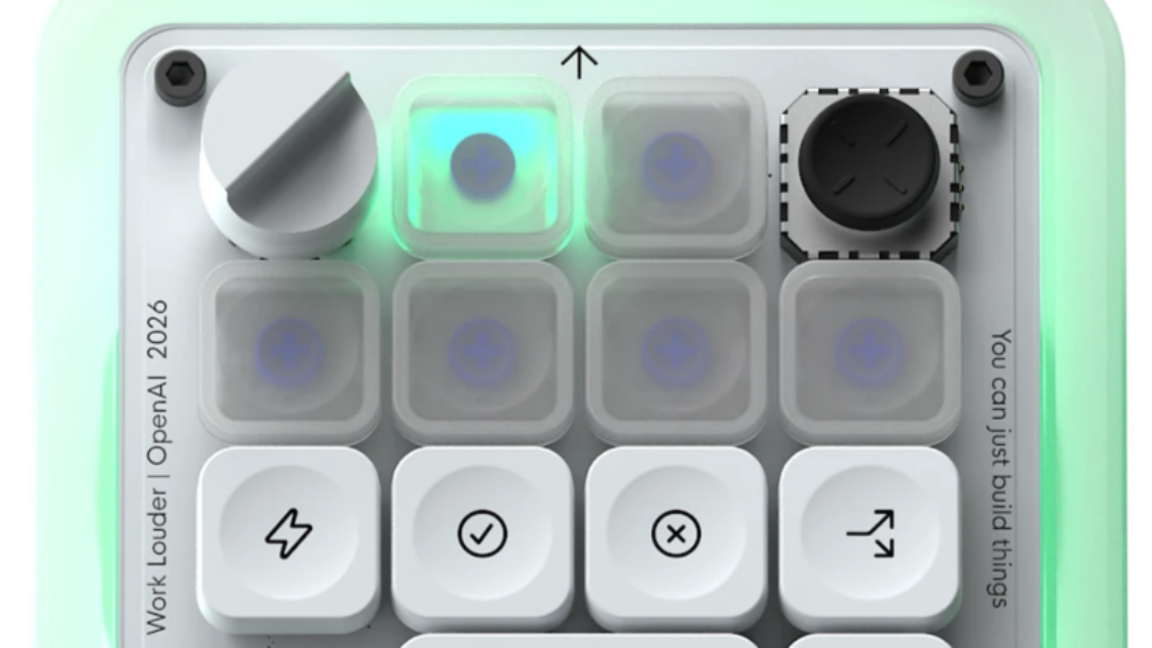
This device emerges from a “limited-run collaboration” with Work Louder, known for its Creator Micro series of customizable square keyboards aimed at creative professionals. The Codex Micro stands out from its counterparts mainly due to its six frosted keys located in the top two rows, which provide color-coded live feedback on up to six active Codex threads, regardless of whether they are currently displayed on the screen.
The colored keys on the Codex Micro are intended to reflect activity status, cycling from white when idle to blue while processing, and green when tasks are completed. Additionally, if feedback or a decision is needed from the user, the keys will flash amber, while a red light indicates an error in a particular thread. This feature allows users to quickly identify which Codex tasks require immediate attention; a simple press on the illuminated button will bring the relevant Codex window to the forefront.
This streamlined, real-time monitoring capability is particularly advantageous for users maintaining a laptop setup for continuous AI agent supervision. However, it’s important to note that this physical keyboard solution is primarily designed for desktop environments, while ChatGPT’s mobile application enables more nuanced monitoring on the go.
In addition, the Codex Micro includes six default buttons designed for frequently used Codex functions, such as accepting or rejecting changes, branching threads, and a “push to talk” button for audio commands. Users have the flexibility to remap these functions via software and customize their appearance with one of the 32 provided keycaps. Even though the initial layer of functions is dedicated to Codex tasks, users can create and navigate through five additional function layers tailored for general computing shortcuts.


