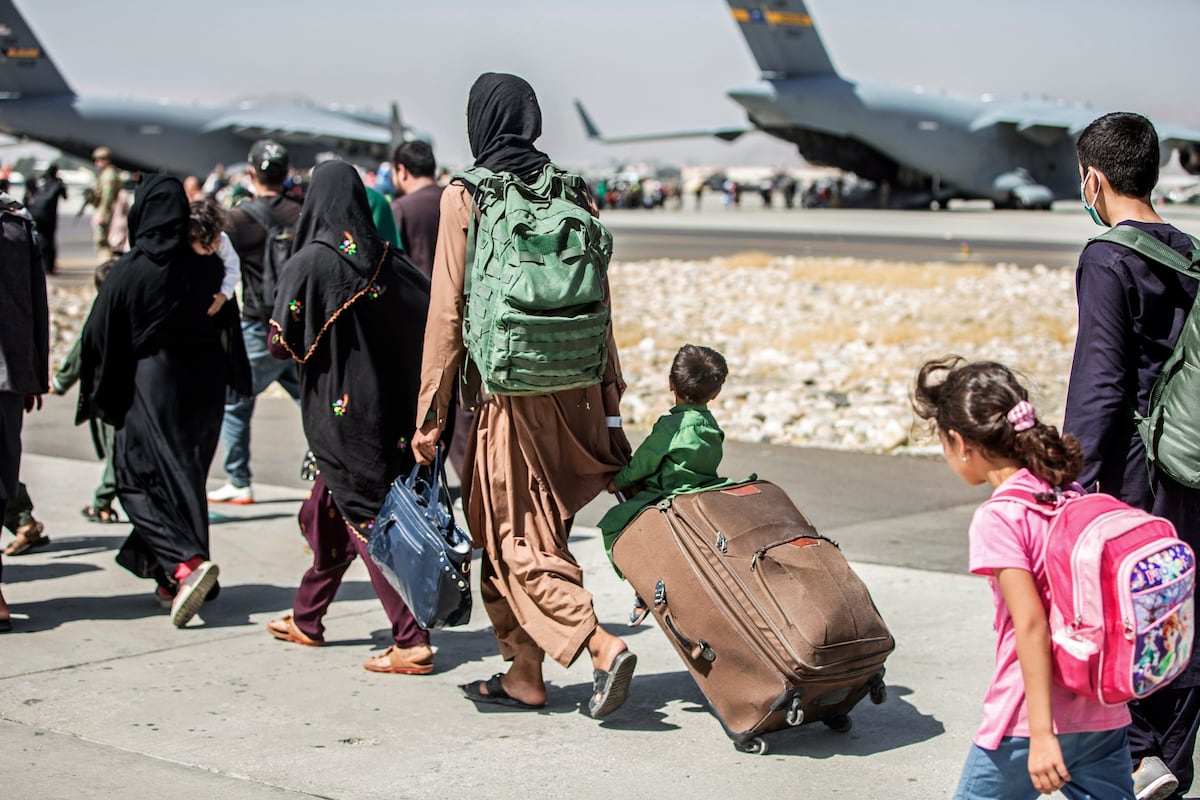
As the fifth anniversary of the U.S. military's tumultuous withdrawal from Afghanistan nears, countless Afghan allies who were promised protection are still in precarious situations, either facing threats back home or experiencing uncertainty while abroad.
To address this issue, the veteran-led organization AfghanEvac has launched an innovative AI-powered tool designed to leverage their extensive dataset on the complex visa and asylum application process. This initiative aims to assist new applicants in navigating the best pathways for assistance.
Named the Visa Pathways and Relocation Information Center (V-PRIC), this tool went live earlier this month and quickly attracted over 30,000 visitors within its first week, according to Shawn VanDiver, a Navy veteran and the organization's founder. While the tool comes with a disclaimer that it does not offer formal legal advice, its purpose is to clarify the often overwhelming options available and direct users to pathways that best align with their individual situations.
Upon selecting the option to “find my pathway,” users input essential details about their location, their status as Afghan individuals who assisted the U.S., and their current level of danger. They are also encouraged to provide a brief narrative detailing their circumstances.
The tool employs a comprehensive database encompassing 124 classifications for U.S. visas and status, including 16 relevant specifically to Afghan applicants. It matches users with the most suitable options based on their qualifications and needs, drawing from detailed global pathway information.
VanDiver is transparent about the limited opportunities currently available. The previous Trump administration imposed an indefinite halt on processing Afghan immigration requests, along with discontinuing temporary protected status for asylum seekers from Afghanistan. This policy change has left around 11,000 individuals already in the United States unable to work and at risk of deportation.
In Doha, Qatar, approximately 1,100 Afghan allies and their families remain stuck at the Camp As Sayliyah processing facility, unable to depart due to travel restrictions despite having secured U.S. entry approval.
Earlier this spring, the Trump administration suggested a contentious option for those in the camp — a choice between returning to Afghanistan or being relocated to the torn and impoverished Democratic Republic of the Congo. Among those in the camp are about 400 children, as noted by VanDiver.
Despite these challenges, VanDiver is optimistic that V-PRIC can assist applicants in saving time by avoiding futile endeavors, highlighting rapidly changing policies, and identifying the most beneficial options.
“It … indicates where obstacles are present,” he explained. “Whether it's due to policy, legal matters, or decisions that could potentially be reversed, the tool clarifies who is able to grant exceptions.”
V-PRIC has been developed utilizing a range of legal outcomes, executive orders, policy statements, along with insights from AfghanEvac’s surveys and straightforward explanatory materials. The organization is dedicated to continuously updating the tool to ensure accuracy and relevance to current conditions, providing insights that might not be available from the U.S. State Department.
For instance, VanDiver referred to a case where an Afghan special immigrant visa applicant received a notification from the State Department to schedule a visa interview, without awareness that the approval process was effectively stalled. V-PRIC could alert the user to this critical detail.
“It advises, ‘Wait, don't rush to schedule your interview. All applications could be denied, and that refusal might create issues in the future,’” VanDiver said.
The mission of AfghanEvac to safeguard the allies who served alongside U.S. forces continues without a set endpoint. A recent survey conducted among over 1,100 Afghans from January 31 to July 7 revealed that nearly half of the 427 respondents still in Afghanistan reported facing direct threats from the Taliban. Meanwhile, 427 others currently in Pakistan are awaiting safe relocation, with 44% expressing fears of deportation and 45% reporting health crises. This includes 39 respondents stuck at Camp As Sayliyah, seeking an exit pathway.
One individual who had spent 282 days at the camp described the experience: “It feels like we’re in jail, punished like criminals — even though we stood with the U.S.,” as highlighted in the survey data provided by AfghanEvac.
VanDiver emphasizes that while V-PRIC should not be viewed as a substitute for legal counsel, he believes it can serve as a valuable starting resource for individuals uncertain about their next steps toward safety.
“Consult a lawyer, initiate a congressional inquiry; this tool provides insights relevant to your specific case,” he noted. “[V-PRIC] can guide users in understanding their options based on their unique situations.”