In a groundbreaking achievement, neurosurgeons in London have successfully completed the first AI-assisted surgery to excise a brain tumor, resulting in the preservation of a 48-year-old patient’s eyesight, according to health authorities.
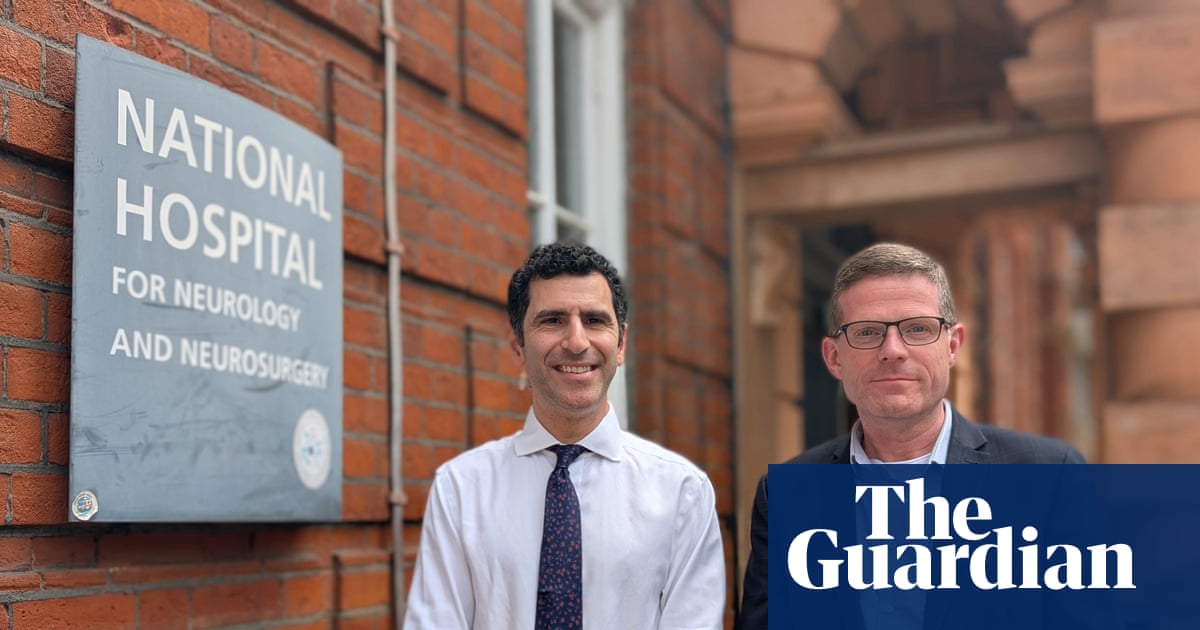
The procedure took place in May at the National Hospital for Neurology and Neurosurgery (NHNN), which is affiliated with University College London Hospitals NHS Foundation Trust. The specifics of the surgery were kept confidential until this week to allow the patient, Rhys Hibbert, adequate time to recover.
During the operation, although the surgical team maintained full control, an AI system was utilized to analyze real-time camera footage. This technology assisted in pinpointing critical anatomy, such as nerves and blood vessels, that needed to be avoided near the 11mm (0.4in) tumor on Hibbert's pituitary gland.
Hibbert shared his experience post-surgery, stating, “When I came round… I could see everything in the room clearly.” Remarkably, he was able to walk unaided without glasses or walking aids within a week of the procedure. He has since resumed his role as a customer service manager, expressing, “It feels like I’ve got a 360-degree panoramic view of everything around me.”
The innovative AI technology used in the surgery helps differentiate small anatomical structures in the brain by color-coding significant elements to improve safety during the operation. Previously, the hospital had employed this technology as a research tool, but this marked its first application in an actual surgical setting.
Health officials noted the intricate arrangement of the pituitary gland, blood vessels, and vision-related nerves, emphasizing that even a slight error could lead to severe consequences, including blindness, stroke, or death.
Dr. Sophia Bano, an associate professor specializing in robotics and AI at UCL and the technical lead on the AI project, explained, “By learning from hundreds of surgical videos, [the system] has been exposed to a broad range of surgical scenarios that would take a surgeon many years to experience.”
Initially, Hibbert’s condition was managed conservatively, but his symptoms—including significant hormone disruption and vision issues—progressively worsened following his 2024 diagnosis. Health officials warned that without surgery, he risked losing his sight.
Reflecting on the significance of the NHNN, which has been operational since 1859 as the world's first dedicated neurosurgical hospital, Hibbert remarked, “It seems very fitting that the same hospital should also be the world’s first to carry out an AI-assisted neurosurgery.”
Prof. Mike Lewis, the scientific director for innovation at the National Institute for Health and Care Research (NIHR)—which sponsored the procedure as part of a clinical trial—stated that this “pioneering surgery” demonstrates the vast potential of cutting-edge AI to enhance surgical support and elevate patient care.