In his inaugural message on X, Jensen Huang, CEO of Nvidia, emphasized the unification of prominent figures in AI and technology who are advocating for the preservation of open-weight AI models. Huang expressed his vision, stating, "AI will transform every industry, power every company, and be built by every country." He highlighted the benefits of open models, which include enhanced safety and cybersecurity, stimulation of innovation, and empowerment of national sovereignty.
On Friday, a notable collective of companies such as Nvidia, Microsoft, Meta, OpenAI, and Mistral endorsed an open letter appealing to US policymakers to refrain from imposing restrictions on open-weight AI models.
"We will measure our AI leadership not by the success of a singular cutting-edge model, but by establishing a robust, open ecosystem that permeates every industry," the signatories remarked in their correspondence.
Originally published without the participation of industry leaders OpenAI and Anthropic, the letter saw OpenAI join the coalition later that Friday, officially confirming its support alongside Microsoft’s announcement. In contrast, Anthropic’s offerings, such as Fable 5, remain absent from the signatories.
Open-source models, like Kimi K3—which has been dubbed the world's most powerful open-weight AI model—are set for broader public accessibility, differing from proprietary models developed by OpenAI and Anthropic. Should the US government impede the operations of firms like Moonshot AI, which is based in China, it could inadvertently benefit OpenAI and Anthropic.
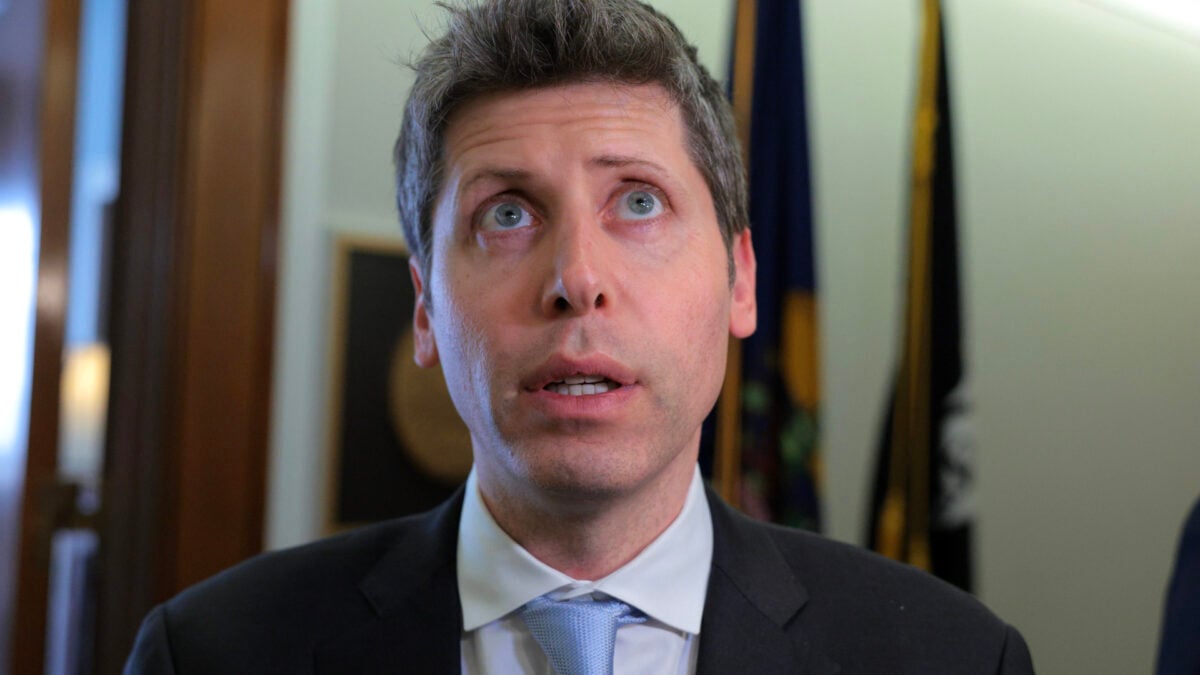
OpenAI’s CEO, Sam Altman, expressed his support for open-weight models, saying, "I want the US to win in AI across both open-source and proprietary levels." Despite the initial controversy regarding OpenAI's lack of support, a community note highlighted speculation about their earlier hesitance to sign.
Although SpaceXAI did not join the initial signatories, Elon Musk later voiced his agreement with Huang, stating: "This has my full support." On Saturday, Google added its name to the letter, with CEO Sundar Pichai explicitly aligning with Huang's views.
This leaves Anthropic as the sole major AI entity yet to support the concept of open-source models. While the letter does not directly address Moonshot AI, its authors advocate for open AI development as a parallel to the impact of open-source software, which transformed computing in the 1980s. "Open source did more than just reduce software costs; it fostered a collective knowledge base that enabled generations of American engineers and entrepreneurs to establish their own authority," they noted.
Despite the US's prestigious history in open-source software, China's advancements in open-weight AI models have been significant. Mozilla and the Linux Foundation, both champions of open-source, have also endorsed the letter.
Among the substantial open-weight models in the US is Nvidia's Nemotron; however, its performance lags behind competitors like Kimi K3. Alexandr Wang from Meta has indicated that his team is dedicated to open models and is working on an open version of its Muse Spark model. Additionally, Reflection AI, formed by former researchers from Google DeepMind, is developing a similar open model.
Earlier this week, Michael Kratsios, director of the White House Office of Science and Technology Policy, accused Moonshot of deriving Kimi K3 from Anthropic's Fable 5 through a controversial training method known as distillation, where a less capable model learns from a superior one. This issue has ignited disputes, with entities like Anthropic alleging their intellectual property is being improperly appropriated.
In the same vein, Treasury Secretary Scott Bessent proposed potential sanctions against companies involved in distillation practices, which he likened to theft.
While the letter defends distillation as an accepted practice, it also implies that companies like Nvidia, Microsoft, and Meta might back measures against those that misuse such techniques. "Concerns regarding unlawful extraction of value from closed models are valid," the letter stated, advocating for specific legal actions rather than blanket restrictions on crucial AI development methods.
As of Friday evening, a total of 32 companies and organizations had signed the letter, including prominent names like the American Innovators Network, Andreessen Horowitz, Meta, Microsoft, Nvidia, OpenAI, and many others.