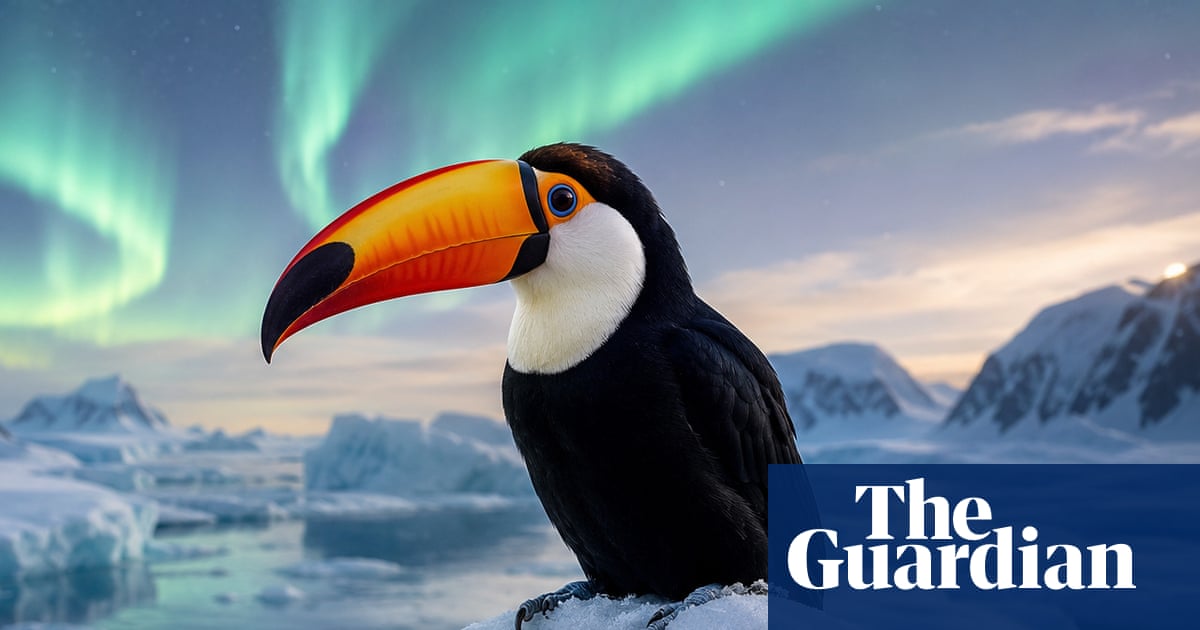
For avid birdwatchers, capturing an image of a species beyond its typical habitat is often considered the pinnacle of their hobby. In the UK, such discoveries frequently make headlines; for instance, a western reef heron—typically found in Africa and southern Europe—was seen in a coastal town in north Wales this past June, igniting excitement on birdwatching online communities.
However, there’s a new challenge on the horizon: the impact of artificial intelligence on wildlife photography.
Researchers are urging bird enthusiasts to curtail the use of AI tools when editing their images, as these modifications pose a significant risk to the reliability of essential citizen science platforms like iNaturalist and Macaulay Library. These platforms are crucial for tracking species’ distribution and habitat shifts, especially in ongoing scientific research.
The emergence of generative AI tools such as ChatGPT and Google Gemini has led to a surge in artificially designed or enhanced pictures of rare birds throughout wildlife photography circles. With these tools, users can rapidly generate high-quality fake images or manipulate existing photos by requesting the AI to remove obstructions like branches, leading to unintentional but notable alterations.
In a recent opinion piece published in the scientific journal Nature, experts have highlighted that multiple fake images have been identified within popular species-recording databases. The true extent of the issue remains uncertain, as many altered images may go unnoticed, potentially tainting public data records.
Dr. Alexander Lees, an ecologist at Manchester Metropolitan University and the author of the journal article, remarked on the overwhelming number of wildlife images on social media that appear to be AI-generated. “It complicates our ability to utilize these photos for understanding species distribution over time and space,” he explained.
While blatant fakes are generally uncommon and easy to identify—like an implausible toucan sighting in Siberia—birders often manipulate images using AI, which may lead to the blending of features from different species within one photograph.
Dr. Lees cited an example where a supposed sighting of a red-winged blackbird in central Brazil—an area where it's rarely seen—turned out to be an epaulet oriole. The photographer had enhanced the image with an AI tool, which inadvertently incorporated elements from the red-winged blackbird, leading to the misidentification.
“There’s a temptation among wildlife photographers to capture visually stunning images, but this could create complications later if AI editing is involved,” Dr. Lees noted.
Citizen science organizations are still working to gauge the extent of this predicament. On iNaturalist, which serves as a platform for nature lovers to document their findings, only 1,400 of the more than 610 million images uploaded have been flagged for AI modifications. Citizen science has facilitated significant discoveries, from observing plant and animal responses to climate change to documenting new behaviors.
Tony Iwane, iNaturalist’s director of community support and a co-author of the Nature article, stated that while the majority of these flagged cases may not originate from ill intent, he encourages users to remain cautious. “People on platforms like ours are providing valuable information that scientists couldn’t gather alone on such a large scale,” he explained. “These platforms serve as real-time indicators of Earth’s changes—such as early blooming of plants or northward shifts in species due to warming climates. Accurate information is vital for effective conservation efforts.”