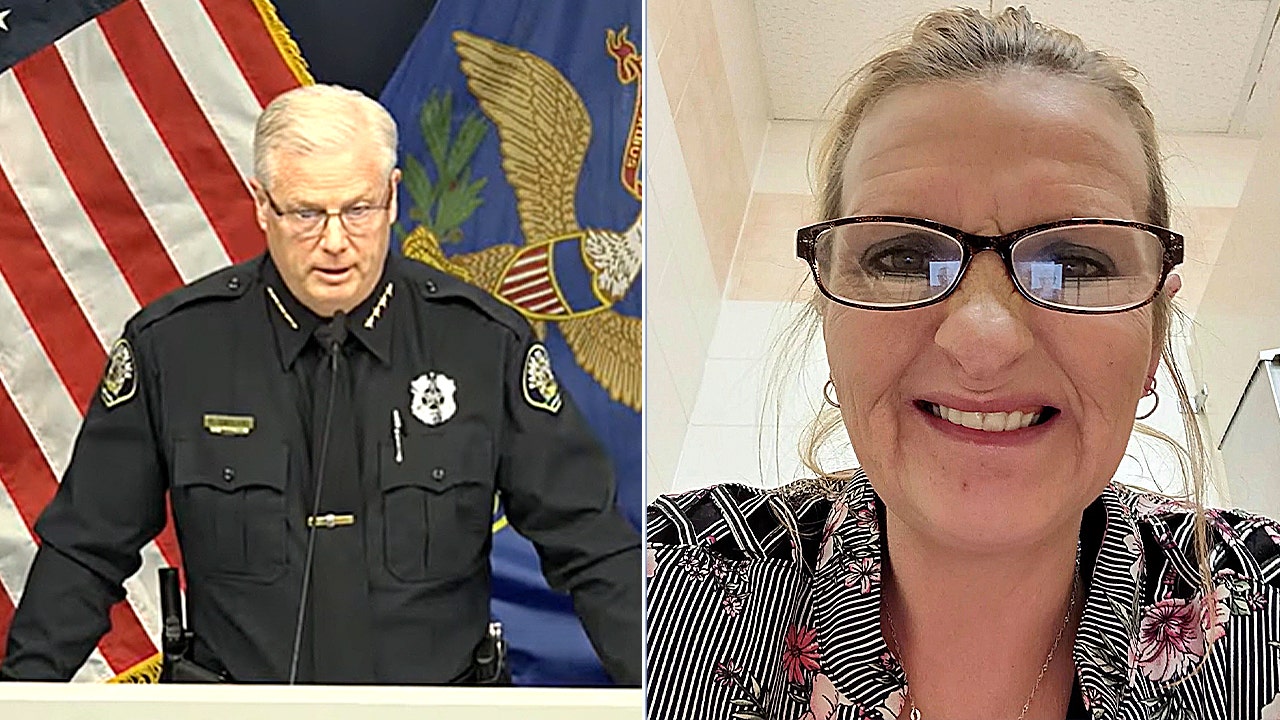
A grandmother from Tennessee has initiated legal action against a North Dakota city and its police department, alleging wrongful detention for nearly six months due to the misuse of facial recognition technology in an investigation linked to a bank theft.
Angela Lipps, 50, from Elizabethton, Tennessee, was reportedly caring for her neighbor's children when law enforcement officers arrived and arrested her at gunpoint in July 2025.
In her lawsuit, filed on September 15, 2026, Lipps claims that authorities relied solely on an unreliable AI facial recognition match to extradite her from Tennessee to North Dakota, despite her lack of any connection to the alleged crime or the state.
Experts in police technology indicated to Fox News Digital that Lipps' case is one of many known instances where law enforcement has mishandled facial recognition tools.
"I was detained in a Tennessee county jail for 108 days," Lipps shared on her GoFundMe page. "They labeled me a fugitive from justice. I had no bail and was never interviewed—just left to wait."
The case in question arose from events that took place in April and May 2025, when an unidentified woman reportedly conducted bank fraud in Fargo and West Fargo, North Dakota, using fake identification and stolen identities.
According to the lawsuit, officials opted to use a photo from the suspect's fraudulent ID instead of reviewing surveillance footage, leading them to conduct facial recognition searches through Clearview AI. Prosecutors claim that while Clearview AI explicitly states facial recognition results should be treated as potential leads, Fargo police misrepresented the AI match as a definitive identification, failing to disclose that it lacked independent verification.
The West Fargo Police Department, in turn, chose not to pursue charges against Lipps due to this unverified AI match. A captain from the department reportedly described facial recognition technology as something to be used only as a last resort in police work, according to the lawsuit.
The complaint alleges that Detective Lucas Heck did not investigate Lipps' financial records or travel history, which would have confirmed her presence in Tennessee during the timeline of the bank thefts. Additionally, he supposedly skipped conducting photo lineups with bank employees, despite surveillance footage revealing clear physical differences between Lipps and the suspect, including a distinct neck tattoo on Lipps that the perpetrator did not have.
On July 14, 2025, U.S. Marshals surrounded Lipps' neighbor's house in Tennessee and arrested her based on a nationwide warrant linked to the alleged crimes.
After being extradited to North Dakota, Lipps faced eight felony charges, the most serious carrying potential prison sentences of up to a decade, all while being held on a $100,000 bond. Her charges were ultimately dropped on December 24, 2025, after she presented bank records proving she was in Tennessee during the thefts.
Upon her release, Lipps discovered that her home, vehicle, and personal belongings had been lost in her absence.
In March 2026, following public concern, the Fargo Police Department and city officials admitted to making errors in their investigative procedures. Mayor Tim Mahoney stated that once mistakes were identified regarding the facial recognition processes, they were promptly addressed.
Clare Garvie, deputy director of Technology Law & Policy at the Policing Project, highlighted to Fox News Digital the concerning trend of increased misidentifications due to facial recognition technology, pointing out that there are 16 known cases of wrongful arrests resulting from this type of error. She emphasized the need for law enforcement to revise their investigative workflows, given the evolving nature of these technologies.
Nate Freed-Wessler, a deputy director at the American Civil Liberties Union, also spoke out about the surge in wrongful arrests due to the integration of AI in policing. He noted that such incidents have been on the rise for at least the last five or six years, with ongoing concerns regarding police documentation practices when using facial recognition technology.


