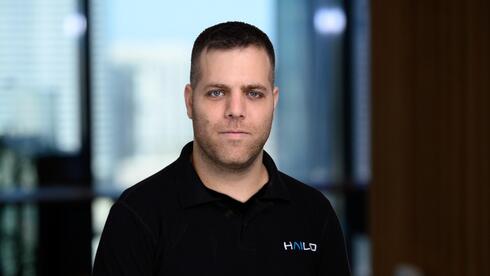
Isaiah Granet faced an uphill battle during his time at Y Combinator, where he encountered rejection from 180 investors within a span of three weeks. Their skepticism stemmed from the belief that traditional phone calls would soon be obsolete. However, Granet has since raised over $100 million in funding to challenge this notion.
In 2023, Granet, alongside his co-founder Sobhan Nejad, launched Bland, a San Francisco-based voice AI firm. Recently, the company successfully secured a $50 million Series C funding round led by Dell Technologies Capital, as reported by Fortune. The investment round saw participation from HubSpot Ventures, Archerman, and Tribeca, with existing investors like Emergence Capital, Upfront Ventures, Scale Venture Partners, Y Combinator, and notable figures such as Max Levchin from Affirm, Piotr Dąbkowski of ElevenLabs, and Twilio founder Jeff Lawson.
Previously, Bland raised $16 million in a Series A in August 2024, followed by a $40 million Series B under Emergence in January 2025. The new funding will enhance their research capabilities, strengthen their engineering team, and facilitate entry into more heavily regulated sectors.
The inspiration behind Bland is deeply personal for Nejad, whose aunt struggled to reach her insurance provider by phone and was consequently denied necessary medical treatment. This prompted the two engineers to develop a voice agent capable of remaining on the line long enough to resolve issues.
While many existing voice AI solutions depend on third-party models and only manage brief scripted interactions—such as appointment reminders or simple routing—Bland distinguishes itself by utilizing entirely proprietary voice models. The company intentionally does not allow integration of models from developers like OpenAI or Anthropic, prioritizing their in-house technology.
"Our uniqueness lies in our exclusivity," Granet remarked to Fortune. "When you use Bland, you know what you're getting, and we strive to provide a superior phone experience, fully taking responsibility for it."
Average calls handled by Bland span from 30 to 45 minutes, often involving intricate processes such as guiding older patients through blood pressure readings or troubleshooting issues, with real-time decisions made regarding emergency service escalation. The company currently manages over 3.5 million calls weekly and processed more than 175 million AI phone calls last year, boasting a client base of over 250 enterprises, including Samsara, Kin Insurance, and CNO Financial Group.
The call center AI market, currently valued at around $3 billion, is anticipated to expand significantly, reaching approximately $13.5 billion by 2034.
Granet envisions a bright future for Bland in this domain. He highlighted the annual revenue of major players in the telephony market—such as Twilio, Genesys, 8×8, and NICE inContact—which he estimates generates around $15 billion from commodity offerings. He noted that Bland has the potential to achieve something substantial in this industry, with multiple potential winners exceeding $100 billion.
Elana Lian from Dell Technologies Capital, who spearheaded the investment, acknowledged the complexity of voice AI and emphasized Bland's ownership of its models as a key differentiator.
Competition in the market is intensifying, with companies like PolyAI—born from Cambridge University and serving clients such as FedEx, Marriott, and Caesars—raising $86 million at a valuation of $750 million. Rivals like Replicant, Observe.ai, Retell AI, and Cognigy also aim for the same enterprise budgets and are well-integrated into existing call center infrastructures. Granet opines that many voice AI vendors lack a cohesive product and often fail to handle large-scale call volumes effectively.
However, Granet indicates that resistance to adopting AI is a significant barrier. He recounted interactions with major call centers in New York that had yet to consider voice AI, still relying on outdated phone trees and systems. Alongside adoption challenges, Bland operates in industries like healthcare and financial services that are heavily regulated, requiring strict adherence to HIPAA regulations and guidelines on AI disclosures and data retention. They do offer self-hosted deployments for sensitive data clients, but HIPAA compliance is contingent upon enterprise contracts.
Granet is open about the precarious position he holds. "There's a possibility we could be wrong, and this could lead to our downfall," he admitted. “Conversely, there’s a chance that we are correct, and it could lead to a $100 billion opportunity.”