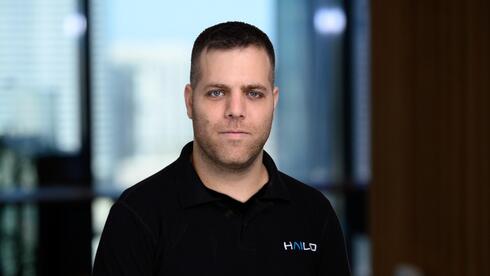
Niteshift, a startup focused on an AI coding agent, has successfully secured $7 million in seed funding, led by Greylock’s Jerry Chen. While this figure might seem modest in the context of today’s AI investments, the startup is backed by notable angel investors including Reid Hoffman, Datadog co-founder Olivier Pomel, Alexis Lê-Quôc, Ankur Goyal from Braintrust, and Misha Laskin of Reflection AI.
The company, co-founded by Sajid Mehmood and Conor Branagan—who were instrumental in Datadog’s rise to a multi-billion valuation—enters a competitive AI coding landscape with a thought-provoking premise. They question why companies would risk their vital assets, such as the code running their products, by relying on model creators like OpenAI and Anthropic, which have been known to disrupt startup ecosystems by launching rival applications.
According to Mehmood, CEO of Niteshift, this situation mirrors Datadog’s early strategy: capturing e-commerce clients wary of building on Amazon Web Services due to fears that Amazon might undermine their businesses. This concern resonates today as the emergence of AI giants, like Anthropic and OpenAI, in various vertical markets raises alarms about what some refer to as the "SaaSpocalypse."
Mehmood reflects on this, stating that at Datadog, a significant segment of their multicloud clientele was composed of e-commerce companies hesitant to depend on Amazon—many of whom faced challenges during the "retail apocalypse." He sees parallels with the current AI landscape, where large companies are venturing into fields such as healthcare, finance, and law.
Niteshift proposes that businesses will increasingly prefer an infrastructure that decouples their coding models from other essential components needed to ensure that AI-generated code is adequately vetted and maintained—while also favoring vendors without competitive conflicts.
It’s important to note that Niteshift does not aim to replace popular coding agents like Claude Code or Codex; instead, it seeks to provide a framework that decreases reliance on them. The company’s AI coding cloud is designed to intelligently navigate between different models, including open-source alternatives, tailored to the specific requirements of each project.
“Seamless switching between GPT and other cloud models is crucial,” Mehmood noted. “Companies are understandably anxious about being overshadowed by these industry titans.”
This innovative approach resonated with Greylock’s Chen. He articulated, “As leading labs advance their technologies, there’s a chance to offer consumers a different route: separating their coding agents from the underlying infrastructure. Niteshift is developing this platform for coding agents, allowing clients to invest in their development tools without being tied to a singular model or agent provider.”
Moreover, Niteshift’s business model is distinct. Rather than selling tokens or labor replacement AI, they provide infrastructure and charge clients in a manner akin to a cloud service, with fees based on per-minute usage.
“Everyone else is in the business of selling intelligence that replaces manpower,” Mehmood explained. “We offer software to agents rather than humans, yet we are still fundamentally selling software.”
Despite entering a highly competitive arena filled with AI coding tools, where the principle of model independence is already established, Niteshift faces considerable competition from players like Cursor, which may soon be acquired by SpaceX; Cognition, which recently raised $1 billion at a valuation of $26 billion; Amazon Bedrock; and the AI gateway OpenRouter, which has secured $113 million at a valuation of $1.3 billion.
Mehmood, however, remains confident that the experience of the founding team provides them with a unique advantage. He emphasizes that both he and Branagan have firsthand knowledge of the challenges that large engineering teams encounter when implementing AI-generated code at scale. They recognize that teams require the ability to run, test, and validate software independently in real production environments, and that infrastructure should be created by those who have navigated these complexities successfully.