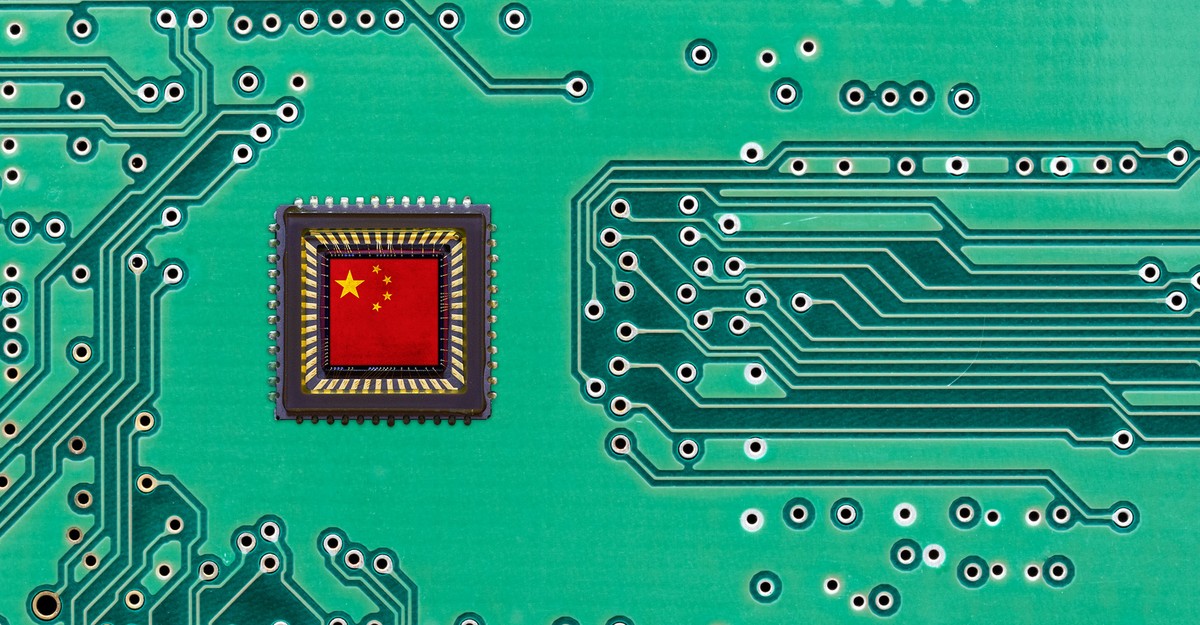
Late last year, President Trump made a pivotal announcement regarding the easing of chip export regulations to China, allowing Nvidia to sell its H200 AI chip to select Chinese companies. This decision sparked concerns within Congress that Trump was putting American security and technological leadership at risk in pursuit of a trade agreement with China’s President Xi Jinping. However, worries about a surge in demand for Nvidia chips from Chinese firms were quickly alleviated by China’s own ban on H200 orders. While certain companies have recently been granted access to these chips, Beijing has worked to tightly control their distribution, favoring domestic alternatives even if they don't match the quality of foreign products.
In an effort to enhance its global influence and shield its economy from external risks, Chinese leadership has focused on reducing its tech sector's reliance on international resources. The goal is to promote indigenous technology developed and produced within China. This strategy appears to have yielded some success, reflected in the growing presence of Chinese electric vehicles on European roads and competitive AI advancements from firms like DeepSeek and Z.ai that are making waves in Silicon Valley. Nonetheless, this increased isolation may hinder innovation as it prevents access to the best global technology. In the field of AI, specifically, this self-imposed seclusion could impede China's progress.
China's ascendance in various industries can, in part, be traced back to its earlier openness to foreign innovations. During the 1980s, as the country began modernizing through international trade, it eagerly absorbed foreign technology to rejuvenate its lagging industries. Policymakers in Beijing subsequently implemented numerous initiatives to support and protect burgeoning sectors, which propelled China to prominence in telecommunications and high-speed rail.
The digital revolution, however, shifted the landscape away from openness, leading Beijing to construct the Great Firewall to block unwanted ideas and information. This resulted in the exclusion of global platforms like Facebook, Google, and others, paving the way for domestic counterparts to flourish, such as Baidu and Tencent, which have amassed a user base of 1.1 billion largely within China. Despite their success, these companies have struggled to compete with the global appeal of more established brands like Meta and Alphabet, with TikTok—developed by ByteDance—being the notable exception that cannot operate within China’s borders.
Travelers to China can witness the unique characteristics of this digital ecosystem firsthand. Communication typically occurs via WeChat rather than apps like WhatsApp or Signal, and social media engagement takes place on platforms like Weibo, RedNote, and Douyin, not on Instagram or TikTok.
President Xi Jinping has intensified China's inward focus on technology over the past decade, coinciding with rising geopolitical tensions with the United States. Recognizing the national-security risks associated with dependence on foreign technology, Xi has prioritized stimulating domestic research and manufacturing efforts, emphasizing self-reliance in semiconductor production. His government has invested hundreds of billions in supporting domestic industries such as chips, electric vehicles, and AI—aiming to rival the West’s most advanced sectors.
Some of Xi's initiatives have shown promise, particularly in the realm of electric vehicles where China has developed a nearly complete domestic supply chain, encompassing everything from batteries to software. However, achieving comprehensive self-sufficiency in chip production has proven to be a formidable challenge. The intricate, globalized nature of semiconductor manufacturing complicates attempts at localization, making an entirely homegrown supply chain virtually unattainable, as noted by Scott Kennedy, a senior adviser at the Center for Strategic and International Studies. The effort is often seen as not only financially burdensome but also fundamentally counterproductive.
Despite these difficulties, China remains committed to bolstering its chip industry. However, this drive for self-sufficiency carries significant drawbacks. The country is investing heavily in alternatives to existing global technologies, and although progress is being made, it is still lagging behind Western counterparts. Chinese AI companies are operating without access to the most advanced chips, and this gap is likely to persist if the government insists on using domestically produced alternatives. Collaboration and cross-border technology exchange have long been key drivers of innovation, especially in semiconductors. With the emergence of two distinct ecosystems—one in China and the other in the U.S.—some innovations are likely to be lost along the way.
As with the predecessors of China's AI industry, today's firms are cultivating their products within a highly regulated and confined domestic market. The reliance on AI products developed by local companies such as DeepSeek and Alibaba, rather than using notable tools like OpenAI’s ChatGPT, restricts access to top-tier AI technology—technology that is shaping economies and societies globally. Recently, Beijing regulators took an unprecedented step in national security by mandating that Meta reverse its $2 billion acquisition of Manus, an AI firm originating from China. This move underscored the Chinese government’s stance against international collaboration.
Furthermore, Beijing continues to impose constraints that may hinder the advancement of its tech sector. Although Chinese AI models are gaining traction globally due to their largely open-source frameworks, regulators are said to be contemplating new limitations on foreign access to cutting-edge Chinese AI technologies—moves that could stifle their global competitiveness.
Amidst these challenges, American firms have accused Chinese competitors of engaging in practices like “distilling,” a method of illegally extracting advanced features from U.S. models for their own use. A recent letter by Anthropic to U.S. senators alleged that Alibaba executed significant distillation attacks on its Claude AI model, leading to enhanced defensive measures by Anthropic. This tension underscores the growing chasm between the two tech ecosystems, reinforcing China's technological seclusion and further complicating its efforts to keep pace with well-resourced American rivals.
It remains possible that China’s technology landscape will develop in its own unique direction, ultimately producing products that, while different, could stand alongside those from the U.S. Some experts speculate that the AI domain may bifurcate, creating distinct ecosystems centered around China and the U.S. with little overlap. However, in building an isolated fortress around its tech sector and limiting access to the best international technology, China risks relegating itself to a secondary position in the global tech hierarchy.