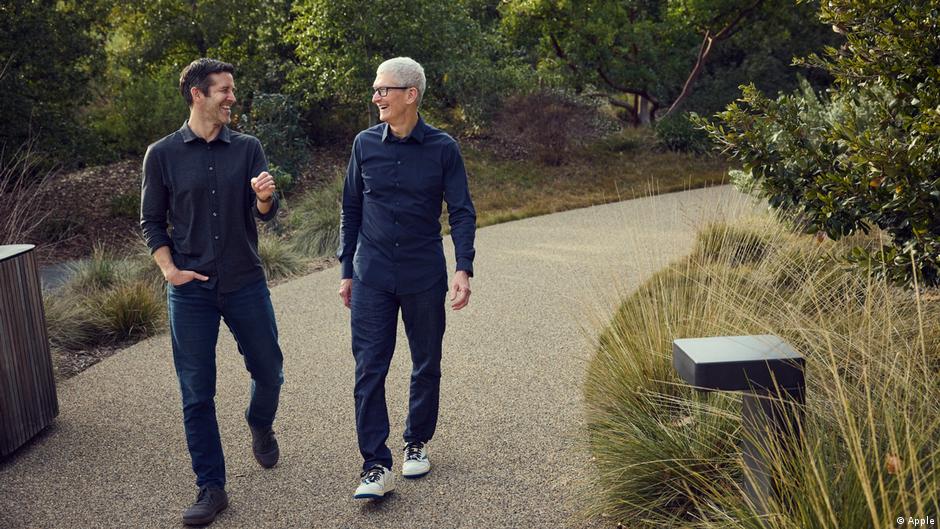
John Ternus has officially stepped into the role of Apple CEO, making him only the third leader of the company in the last three decades. His primary focus will be to revamp Apple's AI strategy, which is crucial for maintaining the company's status as a leader in the tech industry.
Beginning September 1, Ternus will assume the CEO position, succeeding Tim Cook, who has led the company for 15 years. Ternus was named as Cook's successor back in April, and during this interim period, he has collaborated closely with Cook to prepare for his new responsibilities.
Just as Tim Cook inherited the role from the legendary Steve Jobs, Ternus must rise to the occasion. Since Cook took command in 2011, Apple's stock has soared by over 2,000%, and the company has sold more than 3.1 billion iPhones.
As Ternus begins his tenure, he is faced with several challenges, but his ability to steer the company’s future will significantly depend on how he addresses the current gaps in Apple’s AI initiatives. Critics have pointed out that the tech giant has lagged behind its competitors in successfully adopting AI, a situation that Ternus must navigate.
The first opportunity for Ternus to showcase his vision will come on September 9, during Apple's Autumn product launch event titled "Surprise and Shine." Here, Ternus is expected to unveil the company’s first foldable iPhone, along with an upgraded version of Siri, Apple’s virtual assistant that will leverage AI.
According to Francisco Jeronimo, VP for Data and Analytics at IDC, the announcements planned for the event were likely developed during Cook's management and it may take until 2027 for Ternus's strategic vision to become evident. He stated, "September 9 is a significant milestone for the company around foldables and innovation," but cautioned that it might not immediately reflect a shift in strategy under Ternus.
As Ternus prepares to speak, observers will be particularly attentive to how much he emphasizes AI in his presentation. The past few months have underscored the importance of AI, which Jeronimo describes as a technology that is here to stay and will define the future landscape for all companies, including Apple.
He views AI as potentially transformative for Apple, capable of either solidifying its leadership role or presenting formidable challenges. One of the key hurdles is that Apple does not have direct control over AI infrastructure, unlike its previous ability to develop and manage both hardware and software for its flagship products.
"Perhaps this is where John Ternus will differentiate himself from Tim Cook," Jeronimo noted, emphasizing Apple’s current dependence on external AI solutions. Earlier this year, Apple entered into a partnership with OpenAI to incorporate ChatGPT into its devices, a move that has led to legal disputes over alleged trade secret violations. Apple also formed an agreement with Google to utilize Google's Gemini models for its AI applications, including the new Siri iteration.
Jeronomio cautioned that Apple's dependence on other tech firms could diminish its relevance if companies like OpenAI and Anthropic continue to lead the technological advancements. Apple's historical success has been rooted in its innovative products, and further entrenchment of competitors could pose significant risks, particularly if new AI-driven devices emerge that change how users interact with technology.
As an accomplished engineer who has played a vital role in the development of products like the Apple Watch and AirPods, Ternus is expected to spearhead the creation of innovative AI-enhanced solutions. He was instrumental in the company's shift towards designing proprietary chips, a path Apple now desires to replicate in the AI arena.
Despite the changes at the top, experts believe Apple retains significant advantages, including its large user base and a culture of innovation. Jeronimo suggests that if Ternus effectively addresses the challenges posed by AI, it could lead to tremendous growth for the company. "The next few years will determine if Apple is on the right trajectory or facing real struggles."
Ternus’s immediate challenge is to confidently step into a role that has been prominently defined by both Steve Jobs and Tim Cook. Jeronimo aptly summarized the dual legacy: "Steve Jobs was the guru of innovation and disruption, while Tim Cook excelled at execution. I believe John Ternus can embody aspects of both."