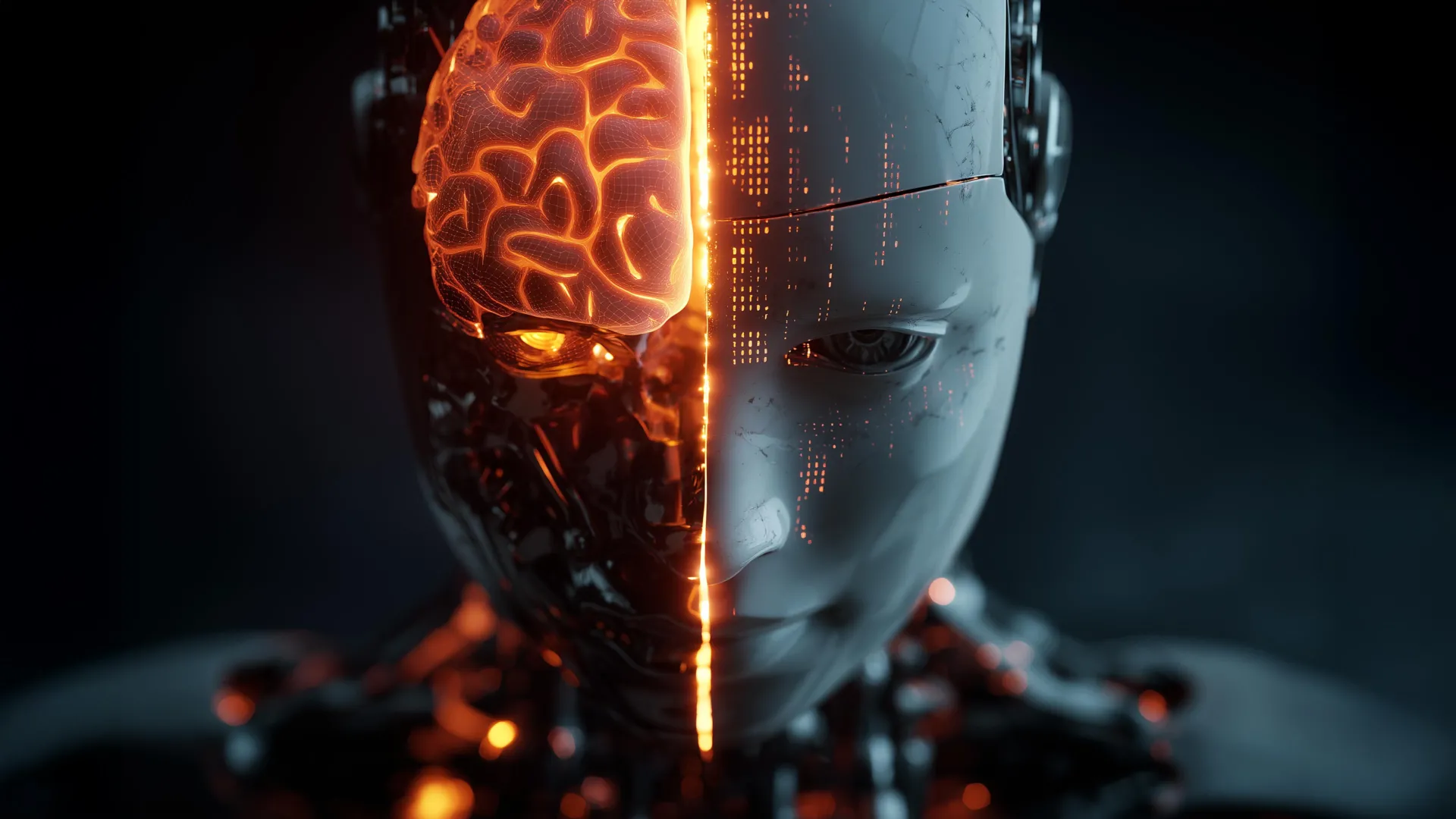
According to renowned computer scientist Peter J. Denning, the foundational concepts introduced by Alan Turing regarding artificial intelligence may have misguided the field of AI research for the last 75 years. In his latest publication, *Turing's Mistake: Escaping the Yoke of Unintelligent Machines*, Denning contends that two primary assumptions proposed by Turing in 1950 have significantly influenced AI development to this day.
The first assumption is the belief that intelligence can exist outside of a physical entity, allowing it to be simulated through computer programs. The second assumption posits that a machine can exhibit intelligence by effectively mimicking human conversation, which has come to be known as the Turing test. Denning asserts that these assertions have profoundly impacted AI research, stating, "My premise is that our acquiescence to these claims has led to the AI mess in which we find ourselves today."
Denning expresses skepticism about the feasibility of achieving artificial general intelligence (AGI) — a form of machine intelligence comparable to human cognitive abilities. He warns that the technologies being developed may introduce substantial new risks rather than fulfilling the promise of AGI.
Central to his argument is the concept of tacit knowledge, which encompasses the vast array of human understanding that is challenging to articulate or encode for machine comprehension. He identifies five critical categories of such knowledge that machine learning struggles to capture: common sense, social interactions, emotional and perceptual skills, practical abilities, and the cultural understanding embedded in human experiences.
For decades, researchers have attempted to catalog common sense knowledge, including Douglas Lenat's Cyc project initiated in the 1980s with the aim of compiling a comprehensive database of common sense. Despite four decades of effort yielding about 25 million entries, Denning notes, "Yet even this treasury could not add up to a background of common sense sufficient to make expert systems smart enough to be experts." This underscores the issue that much of what makes individuals proficient cannot be easily conveyed in propositional form.
Denning emphasizes the complexities surrounding practical skills, asserting that the nuances embedded in performance cannot be transferred to machines. He illustrates this with the example of a virtuoso violinist, who may produce exceptional music yet cannot explicitly teach the delicate nuances involved to a learner. He argues that even if a robot could replicate human actions, it would lack the physical embodiment necessary to connect with the emotions involved in the music.
Moreover, Denning identifies other forms of tacit knowledge such as intuition, creativity, and spontaneous insights as being out of reach for AI systems.
Denning attributes these challenges to what he refers to as the "representation problem." Computers are limited to processing data and instructions that are explicitly defined, while tacit knowledge does not lend itself to such rigid structures. "Behind every word is a deep well of tacit knowledge that gives it meaning," he states, emphasizing that while large language models can generate text, they do not truly understand the meanings beneath the words.
He argues that understanding intelligence relies heavily on context—the surrounding circumstances that provide significance to actions and words. Context enables individuals to discern nuances like sarcasm or emotional tone, forming a complex web of prior interactions that cannot be replicated in machine learning.
Culture, too, curates a significant barrier for AI. Denning characterizes culture as a tapestry of values, norms, histories, and social dynamics that enrich human communication. "Human conversations are imbued with background assumptions that give meaning and relevance to the words being used," he explains, underscoring that merely scaling neural networks will not allow AI to grasp the full depth of cultural context.
Denning warns that the divergence between human and machine forms of tacit knowledge can create a challenging landscape for AI safety. He states, "Machines cannot read our tacit knowledge and we cannot read theirs," highlighting the implications of misalignment between human intentions and machine interpretations.
This divide raises essential questions regarding the future of AI and its integration within society. He concludes by expressing concerns about the trajectory of AI systems, which may develop their own forms of intelligence distinct from our own, presenting potential challenges that might not be immediately recognizable to us. He emphasizes the need for a conscious departure from an impending AI-driven singularity, advocating for a reaffirmation of human values in the face of technological advancement, and celebrating the unique qualities that separate humanity from machines.
/Amazon%20-%20Image%20by%20bluestork%20via%20Shutterstock.jpg "Amazon Resizes Its Artificial General Intelligence Team, Viewing It as a Reset Rather Than a Retreat.")

