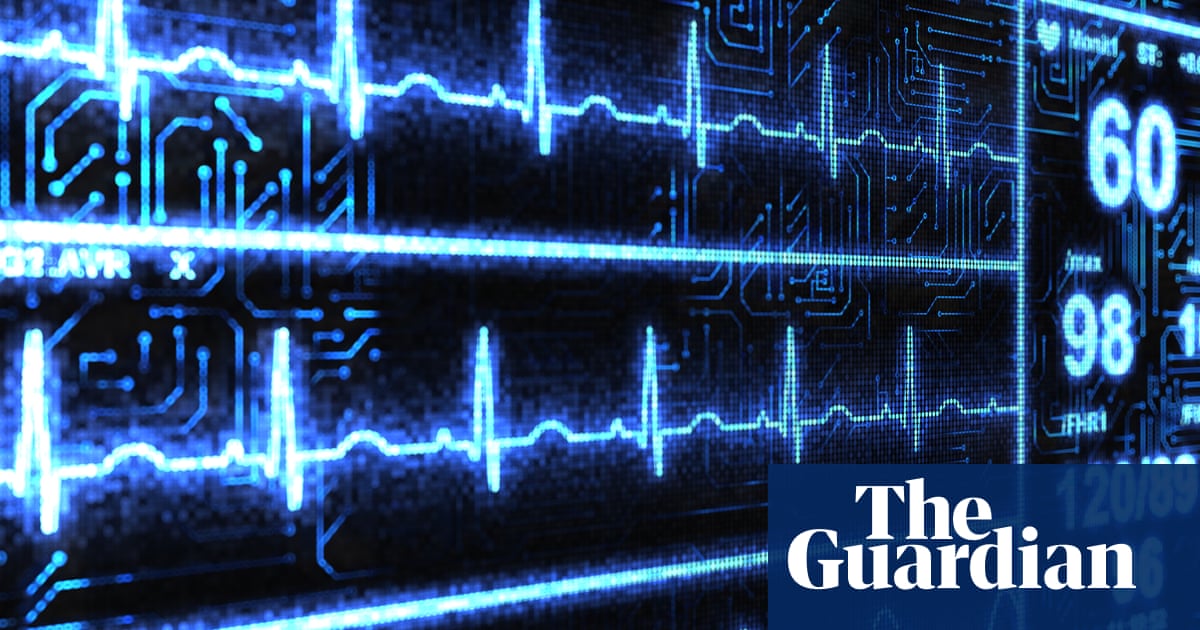
A team of medical experts has introduced an advanced AI tool capable of detecting heart disease in under two seconds. This innovative technology has been trained on a vast dataset including millions of patients and is designed to extract far more data from standard electrocardiograms (ECGs) than what can be recognized by the human eye.
For over a century, the traditional ECG has played a crucial role in assessing the heart's electrical activity, aiding in the identification of heart attacks and irregular heart rhythms. However, while ECGs can provide valuable information, they do not diagnose heart disease directly. That task typically requires an echocardiogram—a type of ultrasound scan—often resulting in lengthy wait times for patients.
The newly developed AI tool can effectively identify signs of heart failure and heart valve disease, which are among the most prevalent heart ailments, by analyzing ECG results almost instantaneously. This exciting breakthrough was presented to thousands of attendees at the annual congress of the European Society of Cardiology in Munich, marking it as a significant moment at the leading global heart conference.
Timely diagnosis is critical for conditions like heart failure and heart valve disease, as it enables healthcare professionals to prescribe lifesaving medications sooner, preventing patients from deteriorating. This AI advancement is particularly noteworthy given that ECGs are one of the most frequently conducted medical tests, with approximately one billion performed each year worldwide.
In a large-scale trial involving 67,000 participants across the United States, the AI system successfully identified up to 81% of individuals suffering from heart failure and up to 90% of those with heart valve disease.
Dr. Sonya Babu-Narayan, a consultant cardiologist and clinical director at the British Heart Foundation (BHF), which sponsored the study, expressed enthusiasm about the project. She remarked, “The capability of AI to deliver insights from an ECG almost instantaneously is truly revolutionary. Although the AI ECG will not catch every heart condition, it can help prioritize patients deemed high-risk, enabling faster access to the necessary diagnostics and treatments that can save lives.”
While the tool cannot definitively diagnose heart failure or heart valve disease on its own, it provides strong indicators that warrant further investigation. Patients identified as high-risk can be expedited for echocardiograms, effectively reducing waiting periods that can extend for months.
Professor Fu Siong Ng, a cardiology expert at Imperial College London, noted the significance of this development, emphasizing that patients often face long delays for heart ultrasound scans after referrals. “This technology could not only expedite the identification of patients who are at significant risk but also ensure that they receive prompt and urgent care,” he said.
Designers of the AI tool aim to enhance the diagnosis of heart conditions in those who may not exhibit apparent symptoms, thereby broadening its potential impact. This AI model could be utilized across all ECGs conducted in hospitals to unearth high-risk individuals who may benefit from earlier diagnoses.
Dr. Ahmed El-Medany, a BHF clinical research fellow leading the analysis at Imperial College London, characterized the tool as a “superhuman AI.” He highlighted the next step as the creation of portable AI-driven ECG readers for healthcare professionals.
At the Munich conference, delegates also learned about other AI applications, including a method that analyzes brief facial videos to quickly and accurately identify undiagnosed cases of high blood pressure and type 2 diabetes. Researchers from the University of Tokyo and the Institute of Science Tokyo reported that evaluating just five seconds of facial footage could significantly enhance detection rates for these common chronic conditions, which often go unnoticed by millions.


