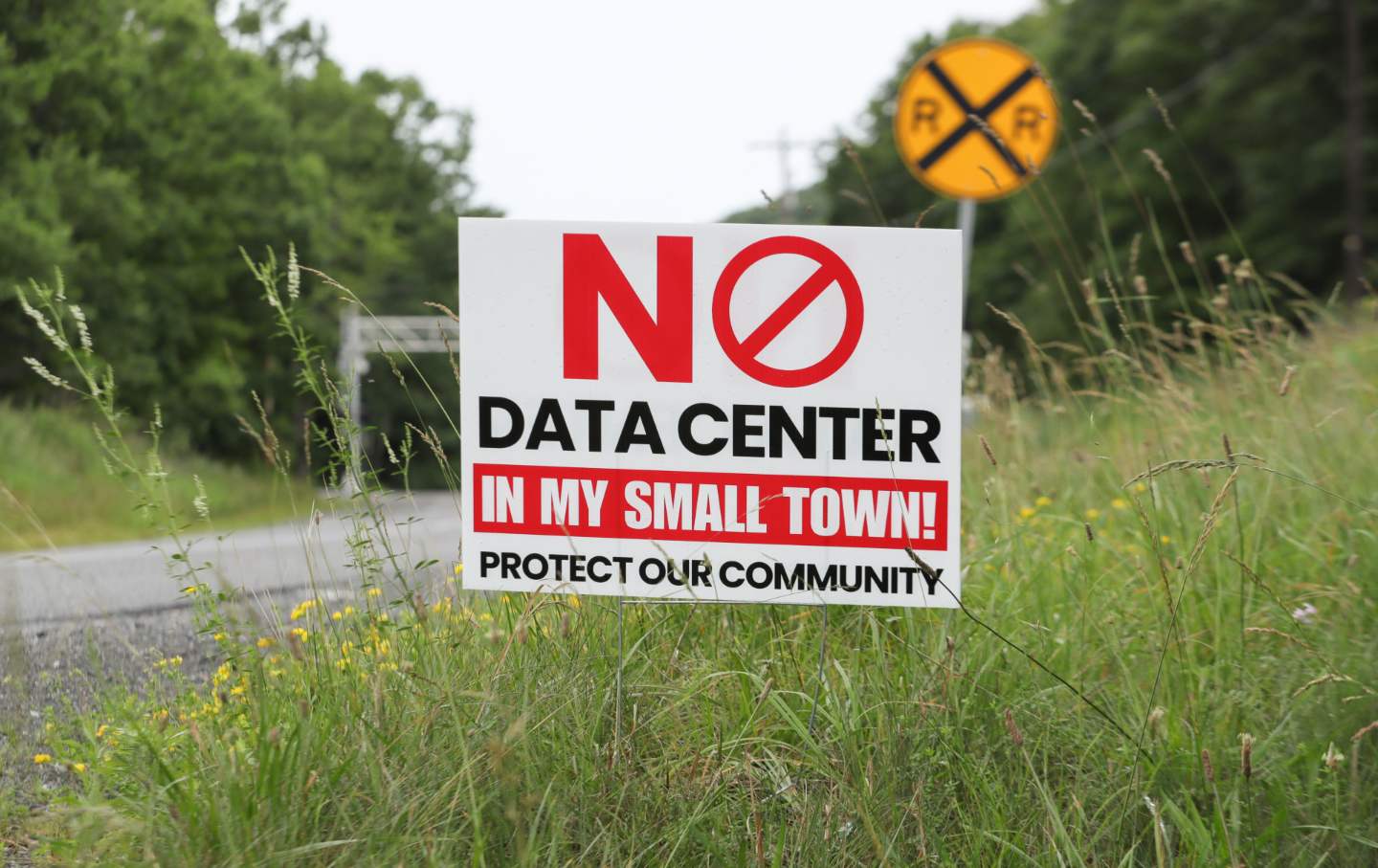
In recent discussions about the impact of artificial intelligence, it's becoming increasingly clear that AI data centers are just the beginning of broader trends of exploitation—particularly in rural landscapes. A prominent example can be found in Mount Carmel Township, Pennsylvania, where a yard sign opposing the construction of a new data center reflects growing community concerns.
The critique of unchecked technological advancement is not new. Ivan Illich's 1970 work, "Toward a History of Needs," challenged the prevailing notion that technological progress is inherently beneficial. Similarly, Wendell Berry, in his 1977 book "The Unsettling of America," highlighted how such advancements tend to erode local skills and community resilience.
Currently, these warnings resonate strongly, particularly as AI fosters a significant decline in skills across society. This erosion could centralize economic and political power to a degree that dwarfs present disparities, leading to a staggering loss of jobs. OpenAI defines AI as “highly autonomous systems that outperform humans at most economically valuable work,” reinforcing fears that this shift is systemic rather than incidental.
As noted by my colleague Erica Etelson, the rapid proliferation of AI data centers has sparked widespread community backlash. Residents from various political backgrounds are voicing their opposition to the noise, land use, and exorbitant energy and water consumption these facilities demand. Promises of data centers that are fully powered by renewable energy or equipped with water-saving cooling systems are emerging, alongside more ambitious ideas like Elon Musk’s proposal to relocate data centers to space, attempting to sidestep local resource conflicts altogether.
However, the viability of these so-called “green” initiatives remains questionable. Historical patterns suggest three key developments unless proactive measures are taken.
Firstly, the race for AI dominance is concentrating economic and political power like never before. By 2025, the combined wealth of the top ten leaders in tech and AI is projected to reach $2.5 trillion, exceeding 8 percent of the total U.S. GDP. This consolidation influences political landscapes, with AI companies and their affiliates anticipated to spend upwards of $150 million on the 2026 midterm elections alone. Policies such as the recently introduced bipartisan "Great American Artificial Intelligence Act of 2026" exemplify the political clout wielded by this elite group, as it seeks to diminish state oversight and evade pressing regulatory challenges, as analyzed by Public Citizen.
Beyond mere oligopoly within the AI sector, these wealthy figures—Musk, Altman, Larry Ellison, and Jeff Bezos—are working to control governments and shape policy in unprecedented ways, buoyed by their vast fortunes and by creating technologies that integrate seamlessly into everyday life.
Secondly, we are on the brink of a rapid and extensive job loss across various sectors, potentially erasing entire categories of work. As outlined in a May 2025 article from Axios, the tech industry is engaged in a fierce competition to develop "Agents," or agentic AI, which can replicate human labor quickly, consistently, and at a fraction of the cost. From coding and finance to customer support and content creation, the applications appear limitless, with many of these systems already operational in companies and even more under development.
Goldman Sachs estimated in 2023 that AI advancements could threaten up to 300 million jobs globally, impacting both knowledge-based professions and vast segments of the service and manual labor sectors. Roles traditionally considered stable, such as those in human resources, billing, and customer service, are already precarious.
Proponents of AI often argue that job losses will be offset by new types of employment opportunities. Yet, the primary job category that has emerged thus far is that of "data annotators." This group, mostly comprising workers in countries like Venezuela, Kenya, and the Philippines, is tasked with the challenging job of reviewing the content generated by AI systems—sifting through an overwhelming amount of inappropriate material that arises from the broad data collection necessary for training these models. Much like commercial fishing, where vast amounts are captured and sorted, AI companies exploit the full breadth of human experience, compensating these workers with minimal pay while they perform this essential yet undervalued labor.