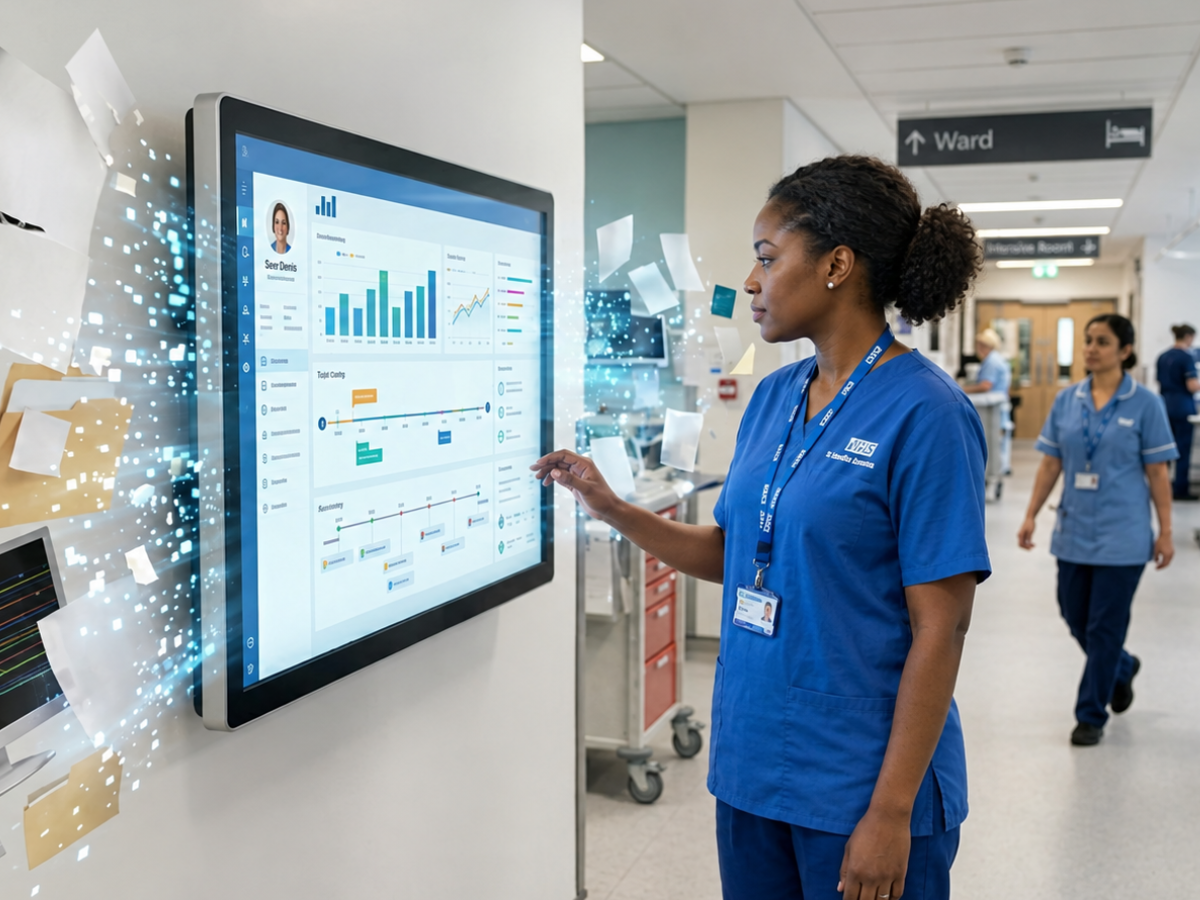
The healthcare landscape is undergoing a significant transformation with the integration of artificial intelligence (AI) into various aspects of patient care, making previous discussions about potential developments feel outdated by 2026. AI is now actively embedded throughout the patient journey, assisting in early disease detection, locating patients lost within complex healthcare systems, forecasting health declines, supporting treatment choices, and alleviating some of the operational burdens in care management.
The critical question has shifted from whether AI will see application in healthcare to how effectively it can enhance patient outcomes and if healthcare organizations can keep pace with its adoption.
1. **Prediction and Diagnosis**
Innovative strides in healthcare AI are primarily evident even before formal diagnoses are established. Researchers are recognizing valuable clinical signals within existing data collected by healthcare systems for various unrelated purposes.
AI is proving beneficial in analyzing routine ECG data. An AI tool has been shown to identify indicators for heart failure and valvular diseases from standard ECGs in less than two seconds, successfully detecting up to 81% of heart failure cases and 90% of valve disease cases across around 67,000 patients in the U.S. Rather than replacing diagnostic processes, this approach could enhance triage, facilitating quicker access to echocardiograms and specialist evaluations.
AI has also been utilized to extract significant information regarding high blood pressure and stroke risks from mammograms. In a study involving nearly 100,000 mammograms from approximately 30,000 women, researchers found that existing screening frameworks could serve as vital tools for identifying cardiovascular risks.
Cooperation between Yale, Cleveland Clinic, and IBM led to the analysis of over 10,000 overnight sleep studies, revealing connections between sleep patterns and future health risks. The study suggested that certain high-risk groups could face double the mortality rate compared to lower-risk cohorts.
A promising urine test supported by AI for detecting pancreatic cancer is currently under review in Japan by a cohort from Nagoya University. This initiative exemplifies the broader trend of leveraging simple biological samples to identify complex conditions.
In the UK, researchers have established an innovative AI model that detects bladder cancer patterns within routine primary care records, successfully identifying 85% of cases a year in advance.
Swedish researchers have created FRACTURE-ML, an AI model that, utilizing health information from 3.5 million individuals, identifies nearly seven times more individuals at risk of hip fracture compared to conventional methods.
At Stanford, investigations show that language patterns in children's speech may correlate with future risks of anxiety and depression, providing predictive indicators as far out as six years.
Furthermore, Sanius Health is partnering with an undisclosed pharmaceutical company to pioneer an AI initiative aimed at identifying patients with rare and ultra-rare diseases earlier by analyzing real-world healthcare data and deciphering patient journeys that mimic rare disease characteristics.
2. **Treatment and Care**
AI is rapidly advancing beyond diagnosis into the realms of treatment and ongoing patient care, emphasizing personalized approaches that consider individual medical histories and biological data to anticipate future health events.
University of Surrey researchers delved into the recovery pathways of approximately 12,700 individuals post-heart attack, uncovering distinct trajectories, one of which had a 44% mortality rate. This information could provide a critical advantage in targeting high-risk patients for heightened follow-up care.
At Indiana University, researchers designed a six-point AI scoring system to forecast the risk of dangerous bleeding into the heart after severe heart attacks, achieving over 84% accuracy and clarity in contributing factors for these predictions.
A digital twin platform for lung cancer, developed by Hong Kong Polytechnic University, integrates genomic, imaging, and clinical data, reportedly achieving 82.5% accuracy in predicting responses to immunotherapy by reflecting changes in the patient's condition.
Pangaea Data utilizes AI to scan clinical notes and detect patients who may be untreated or inadequately treated, tapping into unstructured data that traditional healthcare databases often overlook.
3. **Generative AI’s Evolution Beyond Documentation**
Generative AI's initial major use case in healthcare involved documentation, but the landscape is broadening rapidly. The industry is evolving from AI that simply records to AI that automates portions of the workflow itself.
Assort Health employs an AI referral system that automates 87% of referral processes and successfully converts 79% into scheduled appointments while often recommending a more appropriate specialist.
Abridge is expanding its capabilities beyond clinical notes to provide decision support across numerous health systems, offering evidence during clinical interactions rather than just generating post-visit summaries.
Oracle Health is enhancing its patient portal with conversational AI features, enabling patients to query their health data in straightforward terms. The company's clinician-focused tools also include functions for coding and clinical workflow assistance.
Suki has introduced a clinical dictation tool that uses AI to streamline documentation processes, enabling clinicians to manage notes via voice commands before transferring information into systems like Epic and Meditech.
Hippocratic AI has established a supervisory mechanism designed to oversee multiple healthcare AI agents, claiming a significant 250 million patient interactions without safety incidents, highlighting the growing importance of governance in AI deployment.
4. **Adoption and Governance Challenges**
The central obstacle in the AI healthcare sector may be organizational rather than technical, as rapid adoption often outpaces regulatory governance.
A recent survey of 1,000 NHS staff revealed that 90% were utilizing AI in their clinical roles, with 65% having developed their own AI usage strategies before official employer guidance was provided.
Healthwatch England has raised concerns that AI-generated clinical documentation can introduce errors, resulting in inaccuracies in patient records, such as misreported medications and diagnoses.
In response to these issues, the FDA is actively soliciting public feedback on regulatory frameworks for generative AI medical devices, grappling with how to govern tools that do not conform neatly to existing regulatory models.
Public sentiment is increasingly leaning towards transparency in healthcare AI, with patients expecting clarity about when and how AI is involved in their care.
The Future of Healthcare AI
The advancement of healthcare AI signifies not just a selection of models or technologies but a transformative shift in where intelligence is interwoven within the patient care continuum.
From early diagnosis detection to managing fragmented records, influencing clinical interactions, aiding treatment decisions, and streamlining administrative tasks, AI's impact spans across entire patient populations.
For prevalent diseases, this may lead to earlier interventions, while healthcare systems could benefit from reduced administrative burdens. For clinicians, it enhances access to pertinent information, and for life sciences companies, it promises improvements in how patient populations are identified.
In cases of rare diseases, AI's role could be particularly transformative, enabling early identification of interconnected symptoms before healthcare systems can recognize patterns. The key to success will lie in identifying not just the most effective systems but those capable of guiding healthcare to recognize and address patient needs swiftly and efficiently.


