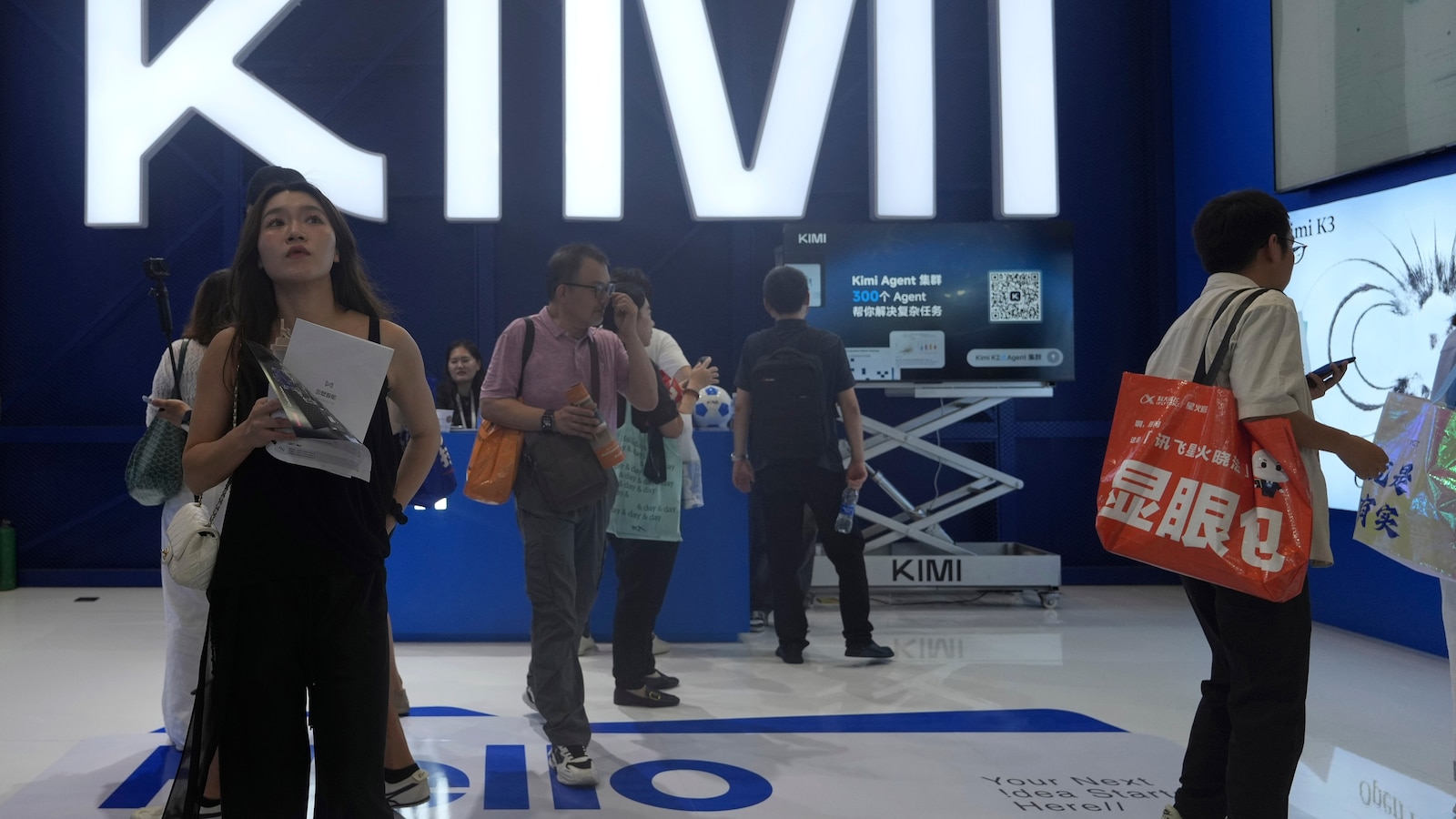
In the United States, Chinese artificial intelligence models are rapidly capturing attention, praised for their cost-effectiveness and efficiency. At the World AI Conference held in Shanghai on July 17, 2026, many attendees were drawn to innovative offerings like Moonshot's Kimi K3, a product that has resonated strongly with users since its recent launch.
Raffi Krikorian, the CTO of Mozilla, transitioned to K3 for his everyday tasks just days after its debut, citing its responsiveness compared to higher-priced options like Anthropic's Claude Fable. Previously, Krikorian relied on an advanced Chinese model, Z.ai's GLM-5.2, for managing various professional responsibilities.
A trend is emerging, with an increasing number of American users embracing Chinese AI solutions. Companies such as Coinbase have reported switching to these models to cut expenses. This trend has sparked concerns among some U.S. tech leaders, but unless an outright prohibition is imposed, it seems likely that independent developers in the U.S. and other regions will continue adopting these efficient systems.
Ongoing restrictions prevent China from accessing some of the most advanced technologies, including key AI components. U.S. Treasury Secretary Scott Bessent has indicated that further sanctions may be introduced to safeguard American intellectual property. The Trump administration recently accused Moonshot of utilizing questionable methods to create K3, drawing criticisms from certain politicians who allege that Chinese firms extract technologies from their models illegally, a claim Beijing vehemently denies.
The advancements from Chinese AI firms mark a significant shift in the competitive landscape, moving beyond last year's developments when DeepSeek made headlines for its comparable performance to U.S. AI offerings at significantly lower prices. Recent AI introductions by startups such as Z.ai and Moonshot are approaching the level of sophisticated models from OpenAI and Anthropic, with Alibaba also revealing its Qwen3.8 Max model.
The influx of innovative models has transformed preferences among users. Curt Meinhold, a technology executive from Greensboro, North Carolina, now favors DeepSeek for tasks like prospecting and sales generation. He noted that most users don’t require the extensive capabilities of high-end models, preferring reliable alternatives that meet their needs at a lower cost.
Goldman Sachs recently suggested that Chinese AI models are at a crucial point for broader adoption, especially as demand rises for “agentic” AI capable of executing complex, multi-step tasks. The cost of using AI is evaluated per million tokens processed, making the price disparity increasingly significant. Meinhold remarked that the Chinese models are nearly as effective at a fraction of the price.
Analysis from OpenRouter indicates that the five leading AI models in popularity are all Chinese. Kimi K3 achieved over 930,000 downloads within a week of its release—a remarkable 200% increase from the previous week—with around 86,000 of those downloads occurring in the U.S.
The popularity of K3 prompted Moonshot to temporarily halt new subscriptions due to overwhelming demand. However, experts maintain that while Chinese AI models are emerging as strong contenders, they still trail behind U.S. counterparts in comprehensive capabilities.
The open-source nature of most Chinese AI models invites widespread exploration and development, contrasting with the closed-source approach of U.S. giants. As these accessible models gain traction, Krikorian expressed concern that the competitive landscape may grow increasingly dominated by Chinese innovations. American tech firms, including major players like Microsoft and Nvidia, have recently signed an open letter advocating for the use of open AI models.
The competitive dynamics in AI continue to evolve, with intense domestic pressures in China pushing companies to scale internationally. Chinese firms are now focusing on raising funding through various avenues, including public offerings, to solidify their position in the global market.
Both China and the United States will be keen to expand their AI ecosystems while protecting critical technologies. The rivalry extends beyond a simple U.S.-China dichotomy, with Chinese companies facing their competitive pressures as well.
Nonetheless, concerns about sustainability loom over these Chinese startups. For instance, while Z.ai reported a revenue increase of 132% to 724 million yuan (approximately $107 million) last year, its net losses also rose by 60% to 4.7 billion yuan ($694 million).
As the landscape evolves, it appears that Chinese AI models will continue to make significant strides, particularly in the U.S. market. Krikorian advised that evaluating these models is worthwhile for anyone engaged in AI development.