Artificial Intelligence (AI) has become a dominant topic across various sectors, making it a challenge to comprehend fully despite its omnipresence. Terms like "agentic AI" and "universal basic income" frequently pop up in discussions led by tech leaders, Wall Street analysts, and policymakers alike, creating a sense of linguistic disconnection. With the rapid development of AI technologies, the vocabulary associated with it evolves just as quickly.
Even those who don’t directly engage with AI may find that their daily lives are affected by it through banks, healthcare providers, streaming platforms, and even automobiles. To better navigate conversations around AI, here’s an alphabetical roundup of essential figures, companies, and terminology to familiarize yourself with.
Key AI Terminology
**Agentic AI:** This refers to a subset of artificial intelligence that can function independently and make decisions without human intervention. It has gained popularity with tools like OpenClaw, marking a significant development in generative AI, analogous to the impact of ChatGPT.
**AGI (Artificial General Intelligence):** This concept envisions AI that can perform intricate cognitive functions, mirroring human self-awareness and critical thinking. Achieving AGI is a central ambition for many professionals in the AI sector.
**Alignment:** This area of AI safety research focuses on ensuring that AI systems’ objectives and behaviors align with human values and intentions.
**Bias:** Given that AI systems are trained on human-generated data, they can inherit various human biases. Types of bias include prejudice bias, measurement bias, cognitive bias, and exclusion bias, which can skew outcomes significantly.
**Capability Overhang:** A term coined by Microsoft’s CTO Kevin Scott, referring to the disconnect between the potential of AI models and their current practical applications.
**ChatGPT:** OpenAI's widely recognized chatbot, which made waves upon its launch in 2022, is often credited with igniting the current AI boom. The acronym GPT stands for Generative Pre-trained Transformer.
**Claude:** Launched by Anthropic in March 2023, this flagship model is particularly noted for its coding capabilities. Following its advancements in early 2026, Claude caused notable fluctuations in various tech stocks.
**Compute:** This encompasses the resources required to train AI models and perform tasks, including cloud services, servers, and GPUs. As of 2026, companies are reassessing their resource management and pricing due to constraints.
**Context Window:** The capacity of a large language model to retain information from previous prompts, improving the quality and coherence of interactions. Increasing this memory area can reduce inaccuracies in responses.
**Data Centers:** Massive facilities filled with thousands of advanced chips necessary for processing large datasets needed by AI models. The energy and space requirements for these centers are growing, leading to regulatory scrutiny in various regions.
**Deepfake:** AI-generated media designed to look authentic, often used maliciously to mislead or extort individuals.
**Distillation:** This technique involves transferring knowledge from a large AI model to a new, smaller one, often under scrutiny as U.S. companies accuse rivals in China of leveraging such methods unfairly.
**Doomer:** A slang term for skeptics who warn against the potential dangers of AI, believing it could threaten humanity's future or doubting its capability to meet ambitious goals.
**Effective Altruists:** A movement advocating for using resources to benefit the maximum number of lives, with a particular interest in deploying AI safely to address pressing issues like climate change and poverty, although the movement has faced criticism.
**Federal Preemption:** The ongoing debate over whether AI regulations should be determined at the state or federal level, highlighted by failed initiatives during the Trump administration to halt state-specific laws.
**Frontier Models:** Refers to cutting-edge AI technologies that surpass the capabilities of existing models. The Frontier Model Forum, launched in 2023 by Microsoft, Google, OpenAI, and Anthropic, defines these as large-scale models prepared for a diverse range of tasks.
**Gemini:** Google’s flagship model, initially named "Bard," launched in 2023. By late 2025, experts considered Gemini 3 to be a formidable competitor to ChatGPT.
**Gigawatts:** A unit of energy that can power around 750,000 homes, often cited to illustrate the scale of data centers and computing power; 10 gigawatts can equate to several million GPUs.
**GPU:** A vital component for training and deploying AI models, with Nvidia being a principal supplier for tech giants like Microsoft and Meta.
**Hallucinations:** Instances where large language models produce incorrect information presented as factual, such as early errors from Google's Bard chatbot.
**Large Language Model (LLM):** A sophisticated software framework designed to understand and generate human-like text, with applications demonstrated in models from OpenAI, Anthropic, and Google.
**Machine Learning:** Refers to systems that learn and adapt autonomously, without needing explicit programming.
**Multimodal:** The ability of AI to interpret and generate outputs across various formats, including text, images, and audio, as seen in ChatGPT's functionality.
**Natural Language Processing (NLP):** Encompasses various techniques for comprehending human language, within which LLMs play a significant role.
**Neural Network:** A computational model that emulates human brain function, commonly applied in facial recognition technologies.
**Open-source:** Describes software that is freely accessible and modifiable, with many calling for greater transparency in AI training processes.
**Optical Character Recognition (OCR):** A technology for identifying text in images and converting it into a machine-readable format.
**Prompt Engineering:** Involves crafting questions to elicit specific responses from AI chatbots, with prompt engineers specializing in optimizing AI interactions.
**Rationalists:** Individuals who advocate understanding the world through reason and scientific evidence, particularly in exploring AI's potential to address complex issues.
**Responsible Scaling Policies:** Guidelines for AI developers aiming to reduce risks associated with AI advancements, which led to Anthropic's decision against releasing Claude Mythos due to concerns over its security capabilities.
**Singularity:** A speculative moment when AI development reaches a point of surpassing human intelligence, often depicted in science fiction narratives.
**Slop:** A pejorative term for low-quality AI-generated content.
**Token:** The fundamental components of LLMs that help in measuring and charging for usage, serving as units of text.
**Tokenmaxxing:** A concept that emerged in 2026 emphasizing maximizing AI utilization to boost productivity; however, it gradually lost favor.
**Transformer:** A neural network architecture central to LLMs, enabling the concurrent processing of extensive datasets and significantly enhancing training efficiency.
**Universal Basic Income (UBI):** A policy proposal for governments to ensure a minimum income for all citizens, gaining traction amid concerns about AI-induced job losses.
**Vibe Coding:** A term coined by OpenAI's cofounder to convey the freedom of using AI in programming, eventually evolving into "agentic engineering" to describe AI's autonomous coding capabilities.
**World Models:** These AI models employ machine learning for understanding physical environments, critical for advancements in robotics and self-driving technology.
Prominent figures in AI
**Sam Altman:** As the CEO and cofounder of OpenAI, Altman is a crucial figure in AI, having briefly been ousted from his position in 2023 before being reinstated.
**Dario Amodei:** The CEO and cofounder of Anthropic, he is known for highlighting potential job losses due to AI.
**Demis Hassabis:** The cofounder of DeepMind and CEO of Google DeepMind, leading AI initiatives at Alphabet.
**Jensen Huang:** Nvidia’s CEO, making significant strides in AI chip technology and boosting the company's market capitalization.
**Alex Karp:** CEO of Palantir, a firm focused on data and national security, known for its non-traditional leadership style.
**Yann LeCun:** A pioneer in AI research and former chief AI scientist at Meta, regarded as one of the founders of deep learning.
**Elon Musk:** After a rift with OpenAI, he founded xAI, which SpaceX acquired, further blending AI with his other ventures.
**Mira Murati:** The CEO of Thinking Machines, recognized for her significant contributions to AI development.
**Satya Nadella:** Leading Microsoft, Nadella oversees innovations including the Bing AI-powered search tools.
**Sundar Pichai:** The CEO of Google, under scrutiny for the company’s AI strategy since ChatGPT’s rise, but seen by some as catching up with competitors.
**Mustafa Suleyman:** Co-founder of DeepMind and former executive at Inflection AI, now in a leadership position at Microsoft.
**Ilya Sutskever:** The chief scientist at Safe Superintelligence and a co-founder of OpenAI, known for his critical stance on scalability in AI.
**Alexandr Wang:** Chief AI officer at Meta, rapidly advancing in the competitive AI landscape after co-founding Scale AI.
**Liang Wenfeng:** Founder of DeepSeek, making headlines with an AI model that competes effectively with leading products at lower costs.
**Mark Zuckerberg:** The Meta CEO investing heavily in AI advancements to bolster the company’s technological capabilities.
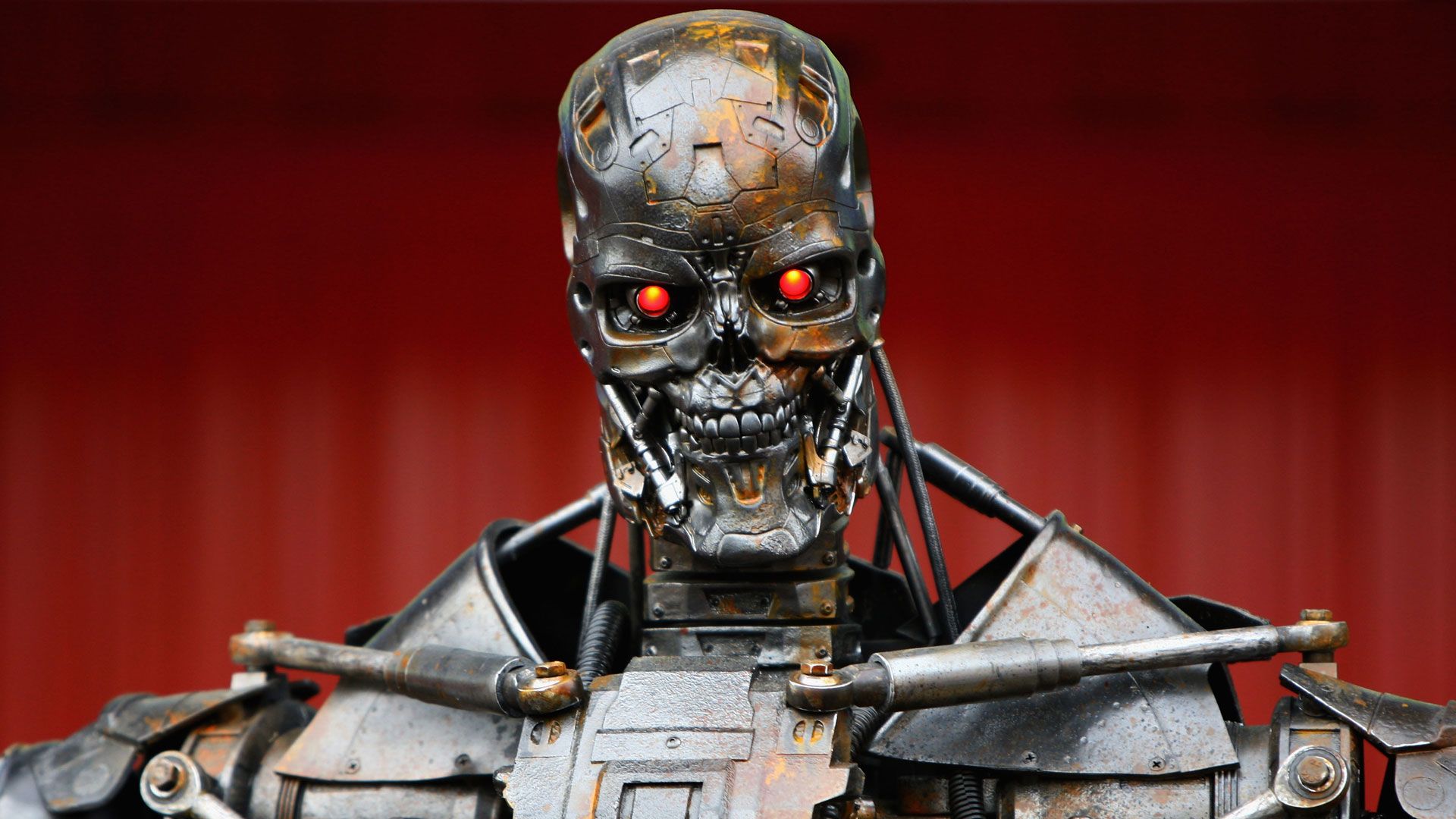

/Amazon%20-%20Image%20by%20bluestork%20via%20Shutterstock.jpg "Amazon Resizes Its Artificial General Intelligence Team, Viewing It as a Reset Rather Than a Retreat.")
