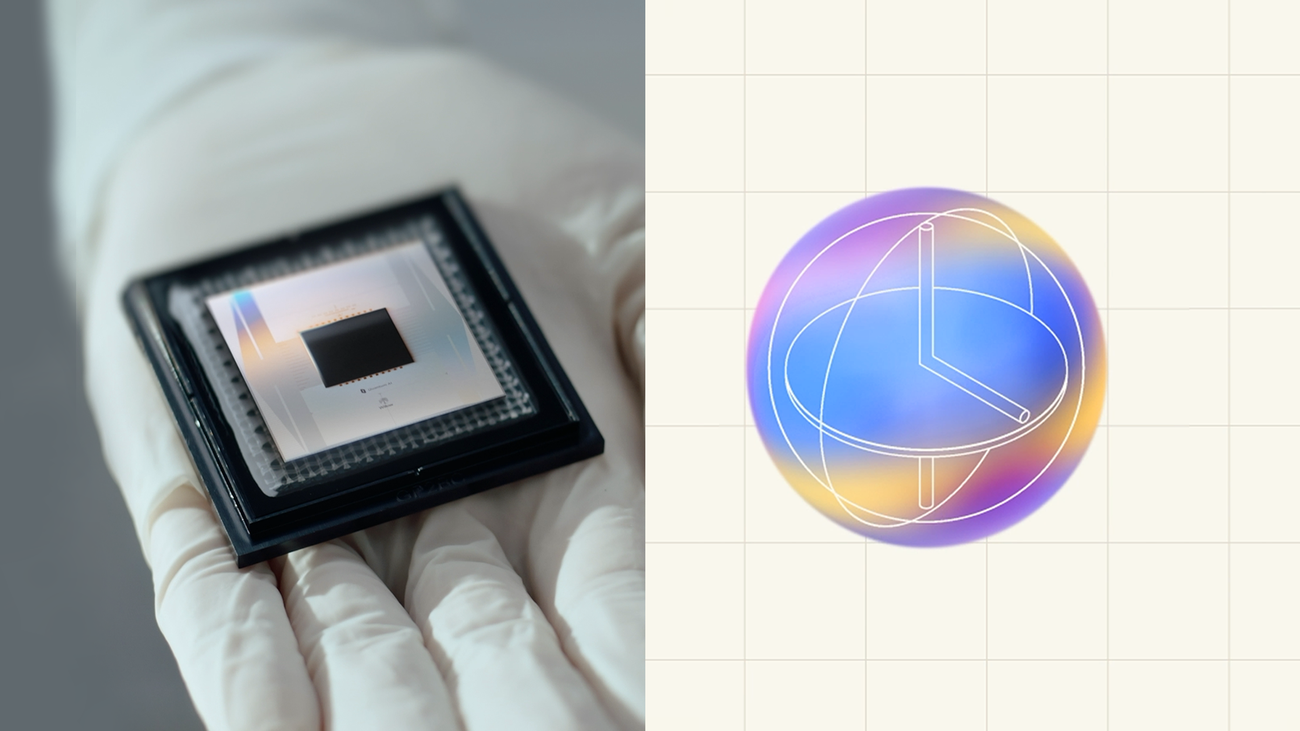
Google Quantum AI has made significant progress in tackling a major hurdle in quantum computing: the implementation of "magic state cultivation" on their Willow processor. This achievement, which shows a remarkable 40-fold reduction in errors compared to previous methods, emphasizes a critical advancement in making quantum computing practically viable. The findings were detailed in a newly published article in the journal Science.
The challenge of magic states
Since 2004, long before quantum computing was a feasible engineering endeavor, the concept of magic states has posed a specific challenge. To enable "universal" quantum computing and run useful algorithms, researchers need to execute a defined set of quantum operations. Achieving this requires the generation of "magic states"—so named for their ability to extend computational capabilities beyond classical boundaries.
However, producing high-quality, error-corrected magic states is notoriously resource-intensive. Estimates suggest that up to 95% of a quantum computer's capacity may need to be allocated for this task, drastically limiting resources available for actual computations. Compounding this issue, each magic state can only be utilized once, making them a precious commodity.
For two decades, scientists have been working diligently to reduce the overhead associated with these magic states.
Details of the breakthrough
In 2024, a team of researchers from Google Quantum AI, including Craig Gidney, Noah Shutty, and Cody Jones, revisited a concept from existing literature and refined it into what is now known as “magic state cultivation.” This innovative technique promised significant reductions in resource demands. The process involves injecting a noisy state into a small section of the quantum chip and conducting a series of carefully coordinated measurements to identify and eliminate errors, thereby cultivating a high-quality, low-error quantum state suitable for practical applications.
While the theory was promising, actual implementation on quantum hardware demanded numerous technical enhancements. For instance, during initial testing of the cultivation protocol, Google Quantum AI research scientist Emma Rosenfeld encountered perplexing data that appeared to contradict physical principles. After extensive investigation, simulations, and discussions, she identified that an erroneous assumption regarding their measurement approach had led to misleading results. A specific type of noise due to equipment drift and temperature fluctuations had compromised the accuracy of their benchmarks. This realization necessitated a shift in both theoretical and engineering strategies. The team introduced additional controls to mitigate the interference and created a new benchmarking technique that utilized the cultivation process to measure itself.
Through various algorithmic breakthroughs and engineering solutions, the researchers established a new benchmark in quantum metrology. On the Willow processor, their method achieved an impressive 40-fold decrease in errors compared to non-cultivated states, reaching a record logical fidelity of 99.99% for T-states.
Significance and future directions
Having published their results in Science, this work represents the first tangible solution to one of the most significant resource bottlenecks in quantum computing, demonstrating that these vital magic states can be efficiently generated on actual hardware.
Furthermore, the team has taken initial steps in aligning Craig Gidney and colleagues' theories with their quantum computing architecture. They successfully navigated between "color codes"—a newer quantum error correction method well-suited for cultivation—and "surface codes," a longstanding error correction strategy. This grafting technique facilitated the effective transfer and survival of purified states within their hardware setup.
Despite these advancements, the team acknowledges that scaling up magic state cultivation remains essential for making this method practical for widespread quantum computing applications, and several technical challenges still need to be addressed. Nonetheless, this breakthrough translates an important theoretical concept into a tangible experiment, bringing Google Quantum AI closer to its vision: creating a functional, error-corrected quantum computer capable of tackling problems currently beyond our reach.


