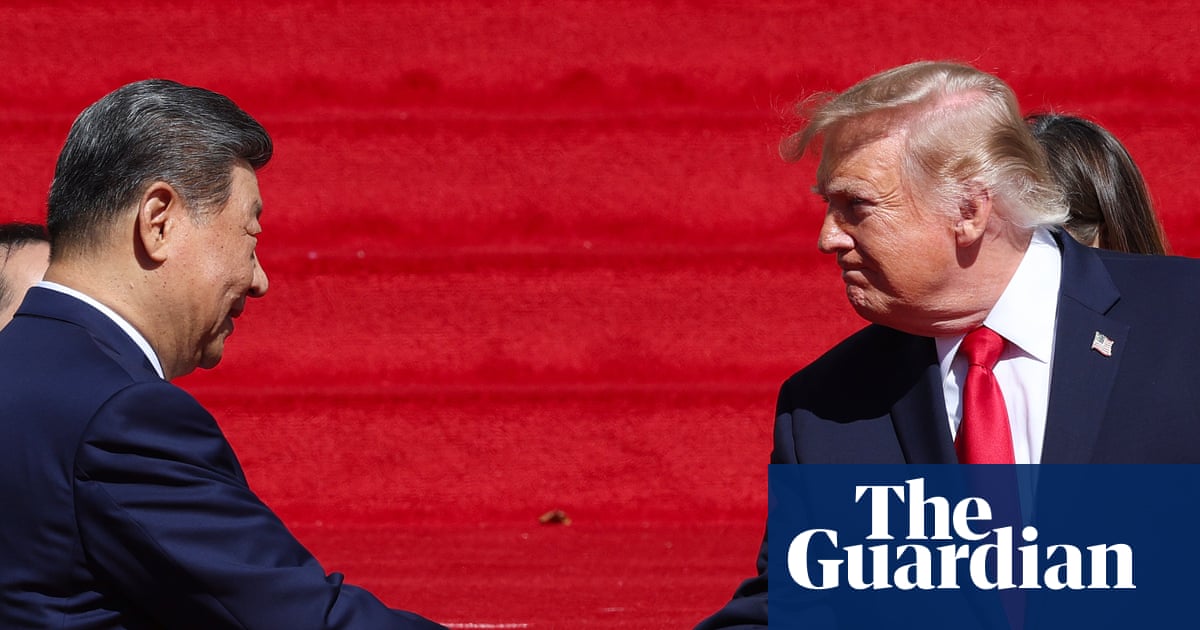
During their recently concluded three-day summit in Washington, Donald Trump and Chinese President Xi Jinping faced backlash for not seizing the moment to address the escalating artificial intelligence (AI) competition between their nations. Critics argue that they missed a significant opportunity to pause the AI arms race, a topic of considerable concern among experts and global leaders who warn of the potential dangers posed by the technology.
The summit, which highlighted ceremonial gestures and personal connections over concrete agreements, saw discussions that spanned the conflicts in Iran and Ukraine, as well as issues surrounding Taiwan. The main takeaway from their encounter was a modest two-month extension of a trade truce, which did little to address the wider issues at hand.
Despite the attendance of prominent tech leaders at a White House dinner, the anticipated breakthroughs in AI policy did not materialize. Ro Khanna, the leading Democrat on the House select committee on China, criticized Trump for failing to propose the establishment of technical working groups to collaboratively address AI regulation. Khanna suggested that a more proactive approach could have positioned Trump as a statesman in a complex domain.
This visit marked the first time in over ten years that a Chinese president visited the White House, and it was Xi's second state visit to the U.S. Their summit concluded with a ceremonial tea and remarks from Trump about the progress made, which notably lacked specifics.
During the visit, the two leaders toured the National Archives, examining foundational American documents like the Declaration of Independence and the Constitution. Trump highlighted a contrast between the ages of the two nations' historical documents, proudly noting America’s 250 years of history compared to China's 6,000 years.
On the topic of AI, Xi acknowledged that both nations bear the responsibility to manage its development responsibly. He emphasized the need to ensure AI's advancement remains under human oversight while China aims to achieve a significant penetration of next-generation AI technologies by 2030. Meanwhile, Trump reiterated his focus on maintaining American leadership in AI, choosing to promote the term "super intelligence" instead of engaging deeply in policy discussions.
A lavish state dinner attended by major figures from the tech industry saw high-profile guests, such as Elon Musk and Tim Cook, sparking commentary from Senator Bernie Sanders about the glaring wealth disparity showcased at the event. However, counterparts in the Chinese tech sector were noticeably absent, emphasizing the lack of any substantial collaborative measures proposed by either leader.
Critics further pointed out that even without a groundbreaking treaty, Trump could have initiated discussions for joint working groups aimed at addressing AI issues and fostering technological cooperation. Jonathan Czin from the Brookings Institution echoed this sentiment, noting a missed opportunity for meaningful engagement during a pivotal moment for both countries.
The summit also illustrated the disparity in Trump’s diplomatic approach towards democratic allies compared to authoritarian states, as he extended a red carpet welcome to Xi. Despite this, the event was mired in controversy due to Trump’s recent restrictions on certain media outlets, raising concerns over press freedom during diplomatic gatherings.
As both leaders prepare for additional meetings later this year, with significant gatherings planned in China and at Trump's golf club in Florida, the outcomes of this summit and future interactions remain under scrutiny, particularly regarding the pressing issues of trade, security, and technological competition.


